



KSA Payroll · Compliance Dashboard
Team Leave Calendar - May 2026
24 employees - All leaves tracked
Annual Leave: 2, 3, 6, 7, 16, 17, 22, 23, 28, 29 · Sick Leave: 8, 9, 10, 20 · Today: 21
Annual Leave Pool
Leave Accurals
Sick Leave Used
Pending Approvals
Monthly Payroll | May 2026
WPS Ready
SAR 4.2M
WPS Integrated · EOS Automated
The difference between a compliant business and a penalised one often comes down to a few overlooked rules: whether a day is counted as a calendar day or a working day, whether unpaid sick leave in the third month reduces gratuity, and how an automated payroll system handles the moment an employee’s entitlement shifts from full pay to reduced pay on Day 31.
This guide is written for HR Directors, CFOs and business leaders who already understand the basics of KSA Labour Law and want a deeper look at what well-managed companies actually do. We cover every statutory leave type in the 2026 framework, the calculations that can trip up even experienced payroll teams, and how a properly configured payroll system can transform leave compliance from a liability into a business advantage.

Statutory Leave in KSA: The 2026 Overview
Under KSA Labour Law, statutory leave encompasses nine distinct entitlement categories. Each carries specific eligibility rules, duration parameters and pay treatment. The table below provides a quick compliance reference. The sections that follow explore the rules that matter most.
Leave Type · Duration · Pay Status · Who It Applies To
- Annual Leave21 days (<5 years) / 30 days (≥5 years)✓ Full pay · All employees
- Sick Leave120 days per yearfrom the date of the first sick leave · 30 full / 60 three quaters / 30 unpaid · All employees
- Maternity Leave12 weeks (84 days)✓ Full pay · Female employees
- Paternity Leave3 days✓ Full pay · Male employees
- Marriage Leave5 days✓ Full pay · All employees
- Compassionate Leave5 days✓ Full pay · All employees
- Examination LeavePer actual exam days · ✓ Full pay · All employees
- Hajj Leave10–15 days (once per career)✓ Full pay · Eligible employees
- Iddah Leave4 months and 10 days (Muslim) / 15 days (Non-Muslim) · ✓ Full pay · Female employees (widow)
Types of Statutory Leave in KSA
21–30days
Annual Leave
✓ Full pay All employees · Service-based 21 days (<5 years) / 30 days (≥5 years)
120days
Sick Leave
Tiered pay All employees 30 days full pay · 60 days at three-fourths pay · 30 days unpaid
84days
Maternity Leave
✓ Full pay Female employees Minimum 6 weeks after delivery
3days
Paternity Leave
✓ Full pay Male employees
5days
Marriage Leave
✓ Full pay All employees
5days
Compassionate Leave
✓ Full pay All employees
Per exam
Examination Leave
✓ Full pay All employees
10–15days
Hajj Leave
✓ Full pay Eligible employees Once, after 2 years of service
4m 10d
Iddah Leave
✓ Full pay Female employees (widow) 15 days for non-Muslim employees
Annual Leave: What the Law Says and Where Employers Go Wrong
Annual leave is calculated in calendar days, not working days. This is the first point of failure for many employers. An employee with fewer than five years of service is entitled to 21 calendar days per year, while those with five or more years are entitled to 30 days. The entitlement starts accruing from the employee's joining date, not from the beginning of the financial year.
Leave Carry-Forward and Expiry
Annual leave may be postponed subject to the conditions set out in Saudi Labour Law. With employer approval, an employee may postpone annual leave or part of it to the following year. An employer may also postpone leave for up to 90 days after the end of the year in which it was due where work circumstances require it. Further postponement requires the employee’s written consent and remains subject to the statutory time limit.
Annual Leave Eligibility · Fahad Al-Qahtani · Manager
Entitlement for the year
Carried forward
Leave taken this year
Pending approval
Pending
Current Balance
11Days
The HLB HAMT payroll system maintains this balance in real time. When an employee's end-of-service settlement is processed, the outstanding leave balance is automatically included in the final settlement. It is calculated at the applicable daily rate on the last working day and aligned with KSA Labour Law guidelines.
KSA Payroll Processing & Compliance
Simplify Your KSA Payroll and Compliance
Sick Leave: The Three-Tier Rule Most Payroll Teams Misconfigure
Sick leave under KSA Labour Law is tiered across 120 days per year. The first 30 days are paid in full. Days 31 through 90 are paid at three-fourths of the employee's normal salary. Days 91 through 120 are unpaid. The complexity arises at the transition points, particularly when an employee's sick leave spans two pay periods during a single absence.
Unpaid Sick Leave vs. Unpaid Leave: A Critical Distinction
Sick Leave Classification
120 daysCurrent year · Auto-categorised by HLB HAMT system · KSA Compliant
- Full pay 30 days · Teir 1 · Days 1-30
- Three Fourth 60 days · Teir 2 · Days 31-90
- Unpaid 30 days · Teir 3 · Days 91-120
- Full Pay Used 30 Days · Three Fourth Pay Used 11 Days
Mohammed Al-Jaber
Senior Engineer
- 30 full · 11 three fourth
Sara Al-Rashid
Finance Manager
- 12 full
The HLB HAMT system automatically categorises each sick leave submission as full-pay, reduced-pay or unpaid based on cumulative days used. Companies can configure whether a medical certificate attachment is mandatory for approval. The approval hierarchy itself can also be customised by leave type, department or seniority level.

Maternity Leave: Protections, Extensions and Payroll Impact
Maternity leave entitles female employees to 12 weeks of fully paid leave. Up to four weeks can be taken before the expected delivery date. A minimum of six weeks immediately following childbirth is mandatory and cannot be waived. The law is explicit: employers may not terminate a female employee during maternity leave or during any illness arising from pregnancy or delivery.
Extended Maternity Provisions
If the newborn has health issues or requires special care, an additional month of fully paid leave may be taken.
Any period of unpaid maternity leave is included in the service period calculation and counts towards gratuity. This must be correctly configured in any EOS settlement process.
For the first two years after delivery and return to work, female employees are entitled to nursing breaks of up to one hour per day, treated as part of working hours.
Payroll teams managing maternity leave manually face particular risks at the EOS stage, where the interaction between maternity periods, service length and gratuity calculation creates additional complexity. An automated system helps reduce this exposure.
Other Leaves
The Remaining Leave Entitlements: Details That Deserve Attention

Category . Payroll, HR & Employment
| 2026The Remaining Leave Entitlements: Details That Deserve Attention
Category . Other Leaves
Paternity Leave — 3 Days
Male employees are entitled to three days of fully paid leave upon the birth of a child. More
Category . Other Leaves
Hajj Leave — 10 to 15 Days


Marriage Leave — 5 Days
Category . Other Leaves
- Maternity Leave
- Marriage Leave
- Hajj Leave
- Iddah Leave
- Examination Leave
- Compassionate Leave
Paternity Leave — 3 Days
Three days of fully paid leave for male employees upon the birth of a child. While brief, this entitlement must be recorded accurately in both HR and payroll systems, particularly where organisations operate across multiple jurisdictions with differing paternity provisions.
Marriage Leave — 5 Days
Employees are entitled to five days of fully paid leave. This leave type requires no qualifying service period and is available once per employee for each marriage event.
Hajj Leave — 10 to 15 Days
This once-in-a-career entitlement is available to employees who have not previously performed Hajj and have completed at least two consecutive years of service with the same employer. The leave includes Eid Al-Adha, with the total duration ranging from 10 to 15 days. Employers may manage the number of employees taking Hajj leave in any given year based on operational requirements.
Iddah Leave: Up to 4 Months and 10 Days
Examination Leave
Examination leave is granted for the actual number of days required to sit formal examinations. The employer may request supporting documentation. Organisations operating tuition reimbursement or professional development programmes should ensure their payroll configuration distinguishes examination leave from training leave, which may have different pay treatment.
Compassionate Leave — 5 Days
Five days of fully paid leave are granted upon the death of a first- or second-degree relative. Like Iddah leave, this entitlement requires accurate payroll coding to ensure it is not inadvertently deducted from annual leave balances.
 Levi’sMr. Shanshan Cong
My experience in working with this team is very much a positive one. Their professionalism is refreshing. Thank you for making the Payroll process a very pleasant experience.
What Smart Companies Do Differently: Technology-Enabled Leave Management
The difference between organisations that sail through Ministry of Human Resources audits and those that face penalties is rarely about intent. It is about infrastructure. The most forward-thinking HR and finance leaders in KSA have moved leave management from spreadsheets into integrated payroll systems. Here is why that matters.
Employee Self-Service: Streamlining the Approval Chain
HLB HAMT’s Employee Self-Service (ESS) portal allows employees to submit leave requests online. Approval workflows are configured to match each organisation’s internal hierarchy. For instance, a request may require sign-off from a line manager followed by an HR manager before it is processed. Authorised personnel have full visibility into pending, approved and rejected leave requests at any time.

ESS Leave Approval Workflow
HLB HAMT Employee Self-Service · 4-step automated hierarchy
Employee Submits
Done
Line Mgr Reviews
Done
HRMgr Reviews
Pending
Payroll Auto-Syncs
Auto
Leave Request
Employee: Mohammed Al-J.
- Leave Type
- Annual Leave
- Duration
- 7 days
- Balance
- 11 days left
System Actions
- Balance check
- Eligible
- Policy rule
- Passed
- Payroll sync
- On approval
- Team notified
- Sent
HLB HAMT ESS Portal: Multi-step leave approval workflow with automatic Payroll Integration
Automatic Payroll Integration
Once a leave request is fully approved, it is automatically integrated into the payroll run. Applicable salary adjustments, whether a sick leave reduced-pay deduction, an EOS balance payment or a carry-forward adjustment, are calculated without manual intervention. This closes the gap between HR and payroll, which is a common source of statutory non-compliance.
Configurable to Every Policy Scenario
The HLB HAMT system supports an unlimited number of company-specific leave types, with rules configurable at company, department, position or individual level. Whether a client needs a unique examination leave policy for sponsored students, a custom approval hierarchy for remote teams or jurisdiction-specific leave entitlements for a multi-country workforce, the system can accommodate it.
System Capability Snapshot
Automatically categorises sick leave across full-pay, reduced-pay and unpaid tiers
Includes leave balance in EOS calculations automatically
Enforces mandatory medical certificate attachments for specified leave types.
Provides a real-time team leave calendar with a monthly view
Provides real-time team leave calendar with monthly view
10 Leave Management Mistakes That Expose KSA Employers to Risk
These are the errors HLB HAMT’s payroll specialists encounter most frequently when reviewing client leave configurations. Each one can become a potential audit finding.
Miscalculating annual leave in working days instead of calendar days
Failing to account for the pay impact of unpaid leave on monthly payroll runs
Incorrect daily rate calculations for leave salary and EOS settlements
Failing to compensate employees for unused annual leave upon termination or resignation
Having no system integration between HR leave records and payroll processing
Using absent or informal approval workflows with no audit trail
Failing to configure company-specific leave policies at the system level
Missing updates when KSA Labour Law is amended
Misclassifying sick leave tiers, particularly at the Day 30 and Day 90 transition points
Having no defined carry-forward limit, resulting in growing, uncapped liabilities on the balance sheet
25
YEARS
GCC Payroll Expertise
Payroll That Works
Behind the Scenes.
For over 25 years, HLB HAMT has helped businesses across the GCC manage payroll with confidence. Our technical depth, statutory expertise and consistent service give growing businesses the reliability they need without the complexity of managing payroll in-house.

Why KSA Employers Choose HLB HAMT as Their Payroll Partner
HLB HAMT has been managing payroll across the GCC for over 25 years. Growing businesses consistently choose HLB HAMT for payroll outsourcing because of its combination of technical depth, statutory expertise and service reliability, which can be difficult to replicate in-house.
HLB HAMT · KSA Payroll Compliance Dashboard
Annual Leave Pool
Across 24 employees
Sick Leave
30 full · 41 three fourth · 12 unpaid
All systems compliant
Leave management · EOS auto-settlement · Audit-ready
EOS Settlements
3 settlements this year
SAR 128K
Employee
Mohammed Al-J.
- Annual
- 30 days
- Sick
- 11 half
- Balance
- 12 days
- Status
- Active
Employee
Sara Al-Rashid
- Annual
- 30 days
- Sick
- 12 full
- Balance
- 18 days
- Status
- Active
Employee
Fahad Al-Kahtani
- Annual
- 21 days
- Sick
- —
- Balance
- 5 days
- Status
- Pending
HLB HAMT KSA Payroll Dashboard: Leave summary, EOS auto-calculation, and audit-ready compliance reporting
EOS Settlement — Auto Calculation
Auto-generated
- Basic salary (last month)12,500SAR
- Years of service6.5years
- Gratuity entitlement54,167SAR
- Outstanding leave balance · 12 days5,000SAR
- Total EOS Payable59,167SAR
HLB HAMT Advantages
Why Choose HLB HAMT for Payroll Outsourcing?
Go Live in 10 Days
SME payrolls activated in as little as 10 days, without operational disruption.
No Minimum Commitment
Stay because it works, not because you are tied in by contract.
ISO 27001 · SOC 2
High standards of data security and quality management certification.
Scales 1 → 10,000+
same platform supports a single hire or an enterprise with 10,000 employees.
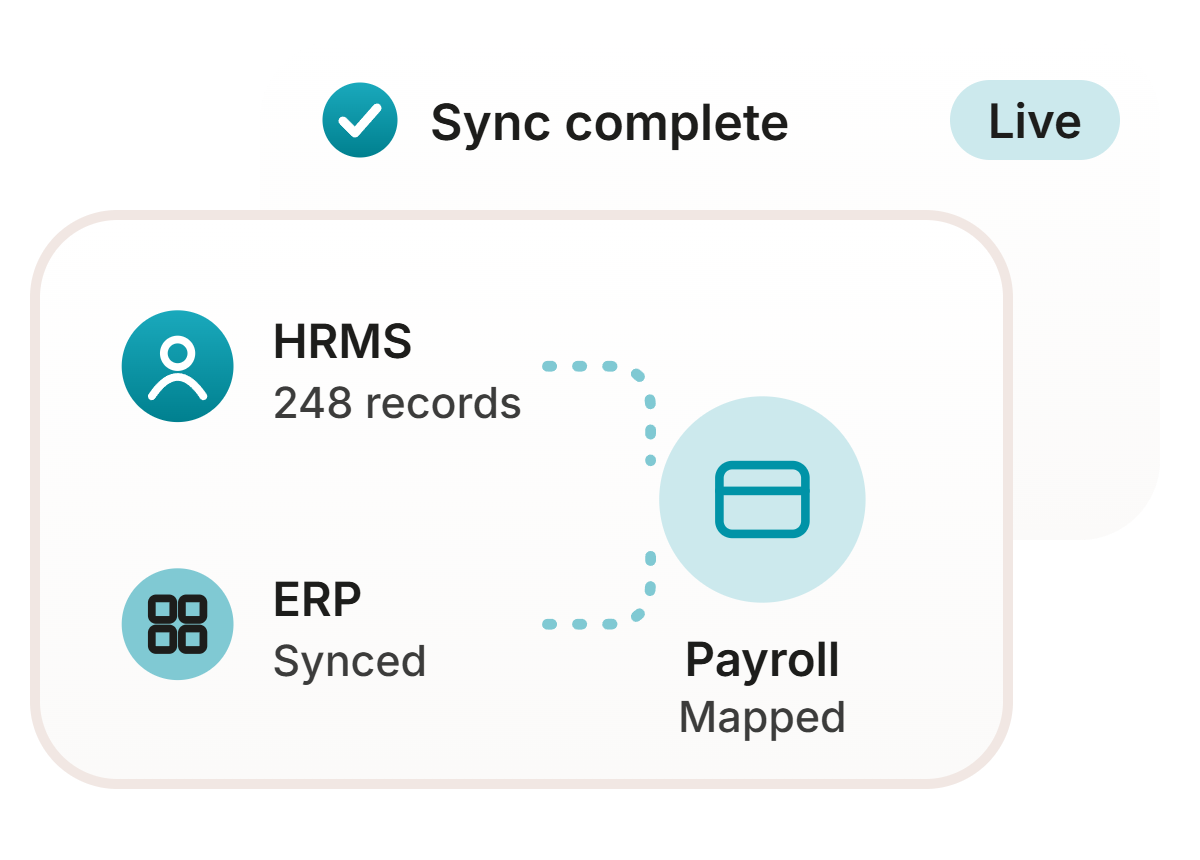
HRMS integration
Connects with Oracle, SAP, SuccessFactors and in-house systems end to end.
Audit-ready always
Clean reports, clear calculations and complete statutory trails on demand.
FAQs on Leave Management
- Maintain accurate employee joining dates.
- Track annual leave based on service period.
- Calculate leave in accordance with applicable statutory rules.
- Record sick leave by pay tier.
- Maintain supporting medical documentation where required.
- Configure maternity and paternity leave correctly.
- Track Hajj leave eligibility.
- Record examination and compassionate leave separately.
- Maintain Iddah leave records where applicable.
- Reconcile leave balances with payroll.
- Include eligible leave balances in EOS calculations.
- Maintain an audit trail for leave approvals.
- Update payroll rules when labour regulations change.
About the Author

Muhammed Jabir
Assistant Manager · HLB HAMT
Muhammed Jabir is Assistant Manager — Payroll at HLB HAMT, with deep expertise in UAE Labour Law compliance, end-of-service settlement, and payroll system implementation. He works closely with HR and finance leaders across the GCC to design statutory-leave configurations that are audit-ready and built to scale.