


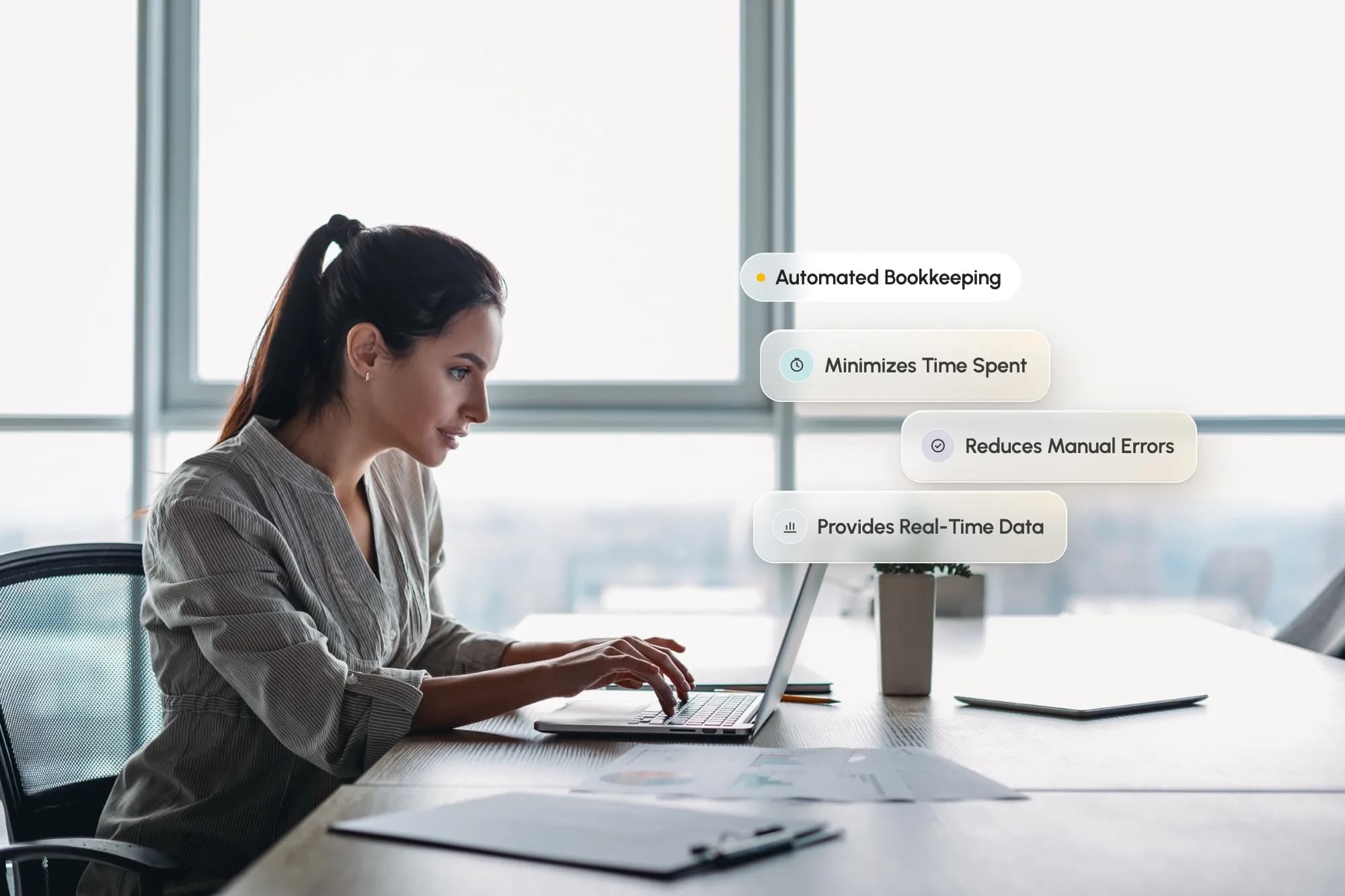
Are you looking to improve your financial management processes? As businesses look for greater efficiency and accuracy, automated financial management solutions are becoming increasingly popular. Technologies such as Robotic Process Automation (RPA), Artificial Intelligence (AI) and Machine Learning (ML) are changing how businesses manage bookkeeping tasks and access financial information. Automation can reduce manual errors, save time and support better decision-making through more reliable financial data. In this article, we explore the benefits of automated bookkeeping, the limitations of traditional methods and practical ways businesses can incorporate automation into their accounting processes.

What is Automated Bookkeeping?
Automated bookkeeping involves managing financial transactions through computerised accounting systems that use technologies such as Robotic Process Automation (RPA), Machine Learning (ML) and Artificial Intelligence (AI).
These systems automate repetitive bookkeeping activities that would otherwise require manual data entry and processing.
By adopting automated bookkeeping solutions, businesses can reduce manual errors and spend less time on routine data entry. This helps maintain accurate financial records while allowing finance teams to focus on other important activities.
Limitations of Traditional Bookkeeping Techniques
Businesses that rely on traditional bookkeeping methods often face several challenges that can affect financial management and operational efficiency.
Data Entry Mistakes
Manual data entry increases the risk of errors, resulting in inaccurate financial records and potentially costly mistakes.
High Operational Costs
Maintaining an in-house bookkeeping team involves ongoing staffing and operational expenses, which can put pressure on business budgets.
Physical Record-Keeping
Managing paper-based records creates risks of loss, theft or damage. It also requires physical storage space and additional administrative effort.
Inefficient Use of Time
Traditional bookkeeping processes can be time-consuming, taking employees away from core business activities and reducing overall productivity.
Lack of Real-Time Insights
Delays in updating financial records can make it difficult to access current financial information. Businesses may have to wait for end-of-month reports before understanding their financial position.
Difficulty in Scaling
As businesses grow, transaction volumes and accounting requirements become more complex. Traditional bookkeeping methods may struggle to accommodate these changing needs efficiently.
Compliance Risks
Manually tracking changing UAE regulatory requirements can increase the risk of missed obligations, reporting errors and potential financial penalties.
Key Benefits of Automated Bookkeeping
Minimises Time Spent
Automated bookkeeping reduces the time required for manual data entry and reconciliation. This allows finance teams to focus more on data analysis, financial planning and other strategic activities.
Reduces Manual Errors
Technologies such as RPA and AI can automate repetitive bookkeeping tasks, reducing errors associated with manual processing and improving the consistency of financial records.
Transaction Management
Automated systems can retrieve transaction information from connected records and help maintain consistency between debit and credit entries across accounts. This makes transaction monitoring and financial oversight more efficient.
Categorisation of Transactions
Machine learning algorithms can categorise transactions based on historical financial data and predefined patterns. This makes it easier to manage and review large volumes of transactions.
Provides Real-Time Data
Automated systems can update financial records as transactions are processed, giving businesses more timely financial information for informed decision-making.
Streamlines Workflows
Automation can simplify transaction processing and payroll calculations, reducing administrative work and helping finance teams manage routine tasks more efficiently.
Enhanced Security
Automated systems can support data protection through controlled access and standardised operating procedures, helping safeguard sensitive financial information against unauthorised access.
Data-Driven Decisions
Accurate and timely financial information supports better performance analysis, financial forecasting and strategic planning.
Regulatory Compliance
Automated bookkeeping can assist with routine compliance activities and record-keeping, helping businesses maintain consistent financial information and reduce the risk of missed requirements.
Effective Ways to Incorporate Automation in Bookkeeping
Businesses can introduce automation into their bookkeeping processes in several practical ways:
- Use RPA for data entry: Automate repetitive data entry tasks to reduce manual work and improve processing consistency.
- Implement automated invoicing: Use invoicing systems to organise invoices, track due dates and support timely payments.
- Automate accounts receivable: Set up automated payment reminders to follow up on outstanding invoices and support cash flow management.
- Automate payroll processes: Use payroll tools to track employee hours, calculate payments and support compliance with applicable tax requirements.
- Leverage real-time reporting: Use reporting features to access current financial information and support faster business decisions.
- Reduce manual input: Automate recurring bookkeeping activities to improve record accuracy and consistency.
- Use AI-driven analytics: Apply analytics tools to identify financial patterns, support forecasting and generate useful business insights.
- Integrate accounting software: Connect bookkeeping platforms with other financial tools to improve data flow and keep financial records up to date.
Explore How HLB HAMT Automates Bookkeeping with RPA Technology
HLB HAMT offers solutions for automating bookkeeping processes using Robotic Process Automation (RPA). We begin by evaluating your existing workflows to identify suitable automation opportunities. Our team then works to integrate RPA solutions with your existing systems. We also provide ongoing support and staff training to help your business get the most from automation. Our RPA analytics and reporting capabilities, supported by Power BI, include the following stages:

Automated Data Capture
Intelligent Processing
Seamless Data Transfer
Real-Time Power BI Integration
Effortless Completion and Informed Decisions