

Key takeaways
- SAP provides a standardized data ecosystem that simplifies real-time tax compliance.
- Integrated e-Invoicing eliminates the need for manual data entry and rework.
- Automated tax determination ensures accuracy across all business functions and jurisdictions.
- Partner-driven solutions like EVATRA bridge the gap between ERPs and local regulations.
- Unified system architecture transforms compliance from a hurdle into a strategic advantage.
e-Invoicing in the UAE might seem daunting at first glance, given its complex integrations, strict compliance regulations, and the need for real-time validations. For many organizations, it can feel like stepping into a complete modification of their entire business process. However, there’s a silver lining. For businesses already using SAP, those moving to this platform, or those with a standardized ERP solution, the e-Invoicing experience is entirely different. What appears to be a significant overhaul for some is, in fact, a seamless extension of what’s already in place.
SAP isn’t just an ERP system; it’s a well-structured, data-driven ecosystem. Transactions here are standardized, governed, and ready for audits right from the source. This means that e-Invoicing doesn’t require you to reinvent the wheel; instead, it enhances what you already have up and running. For SAP users, the benefits are clear:

Access to clean, structured data from the outset
Effortless integration with compliance requirements
Significant reduction in rework and less reliance on outside solutions
End-to-end visibility from transaction to invoice
Automated tax determination based on established rules
Consistent data structures across all business functions
SAP as a Real-Time Compliance Engine
Within the UAE framework, compliance is no longer an isolated function relegated to finance teams at the conclusion of a cycle. It is deeply embedded within transaction processing. e-Invoicing compliant SAP software supports this essential transition by ensuring that:
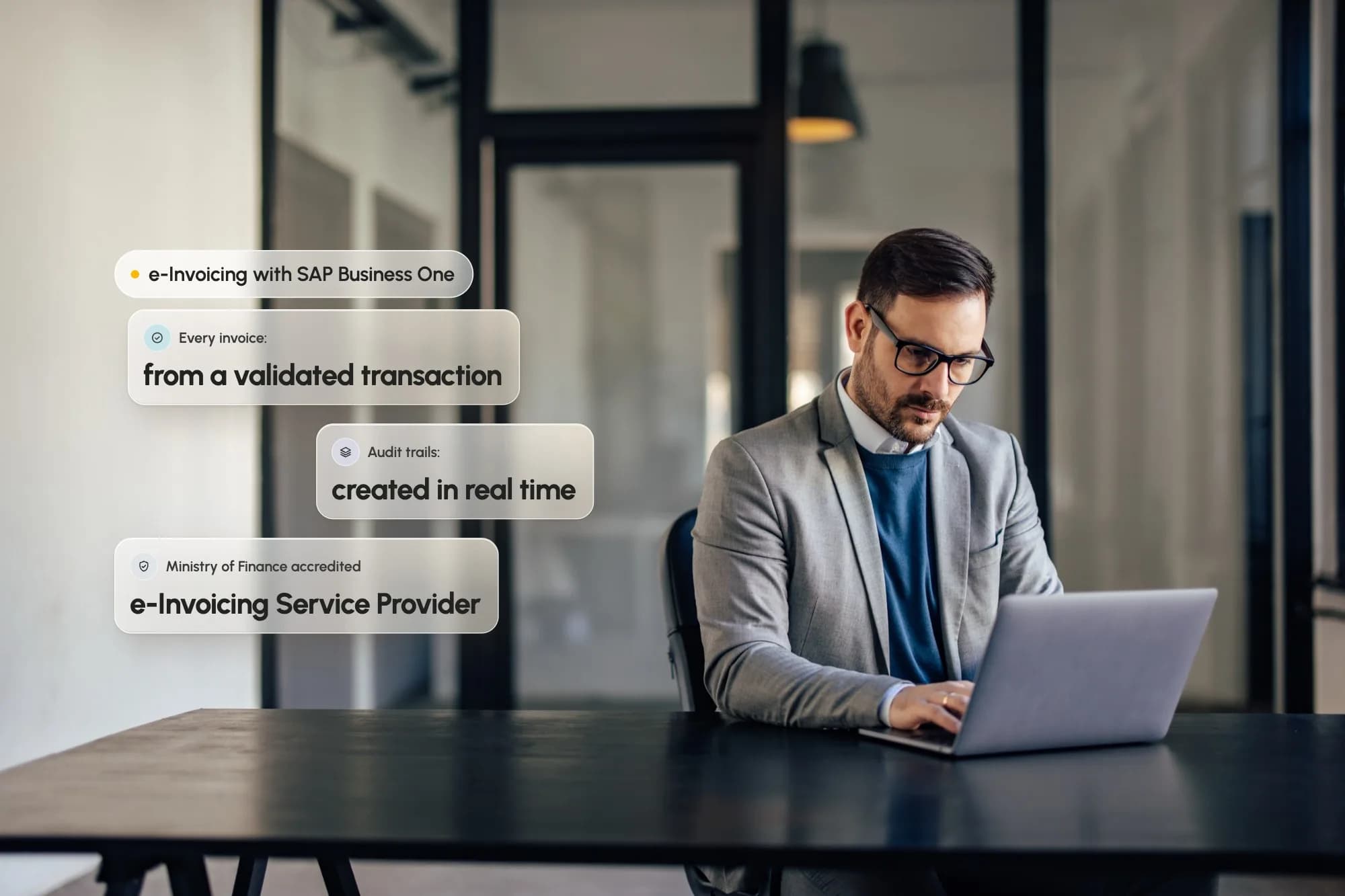
Every invoice is generated from a validated transaction
VAT logic is applied automatically through system rules
Mandatory data fields are strictly enforced at the point of entry
Audit trails are created in real time
By eliminating reliance on manual corrections, this approach dramatically reduces the risk of invoice rejection. Instead of merely responding to compliance challenges, businesses can proactively guarantee that every invoice is compliant prior to submission
The Essentials of SAP e-Invoicing Integration in the UAE
When it comes to integration, it’s much more than just linking systems; it’s about creating a seamless experience where every transaction flowing out of SAP is compliant from the get-go. For SAP users in the UAE, there are a few pivotal areas that require strengthening:
End-to-End Data Mapping Accuracy
Each SAP field, whether it’s customer details or tax codes, needs to align precisely with the UAE’s structured schema. Even the smallest discrepancies can lead to rejections, so precision is key.
Pre-Validation Before Submission
Think of SAP as your first line of defense. By validating invoices internally prior to sending them to the Peppol and FTA, you can significantly cut down on external rejection cycles and prevent operational hiccups.
Scalable Architecture for High Volume
If your enterprise is churning out thousands of invoices daily, your SAP system needs to be equally robust, capable of handling high volumes and real-time processing without a delay.
Security & Compliance Controls
Protecting sensitive financial data is paramount. Encryption, role-based access, and secure certificate handling are all critical to ensure your invoice remains confidential and compliant.
Audit-Ready Integration Logs
Every step of the invoicing process, from generation and submission to validation and response, should be meticulously logged within SAP. This guarantees full traceability and meets regulatory transparency requirements.
Embracing these essentials of SAP e-Invoicing integration not only ensures compliance but also sets your business up for sustained growth and success in the ever-evolving landscape of finance management.
Benefits of e-Invoicing in an SAP-based Ecosystem
Benefits of e-Invoicing in an SAP-based Ecosystem
By automating validation and submission, you can sidestep the delays that often arise from manual adjustments or rejected invoices.
Proactive Compliance Management
SAP empowers your business to pinpoint and tackle compliance issues before they escalate to the regulators, allowing for a shift from reactively managing compliance to proactively ensuring it.
Reduced Financial Risk
With accurate tax calculations and structured validations in place, businesses can significantly minimize penalties, audit exposure, and revenue leakage.
Faster Order-to-Cash Cycle
When invoices are generated, validated, and delivered in a flash, you benefit from quicker customer acknowledgments and even faster payment cycles, ultimately enhancing working capital.
Enterprise-Wide Data Consistency
With each transaction validated in real-time, CFOs can access live financial insights, enabling faster and data-driven decision-making.
Real-Time Business Visibility
By automating validation and submission, you can sidestep the delays that often arise from manual adjustments or rejected invoices.
Embracing these essentials of SAP e-Invoicing integration not only ensures compliance but also sets your business up for sustained growth and success in the ever-evolving landscape of finance management.
Choosing the Right Integration Approach for e-Invoicing
When it comes to e-Invoicing integration, SAP customers in the UAE have two main avenues to explore. First up is
SAP Document and Reporting Compliance (DRC) – SAP’s in-house solution tailored for global compliance. It boasts impressive integration capabilities, centralized oversight, and the flexibility to scale across various regions.
The second path is to adopt a partner-driven integration approach, powered by EVATRA- advanced e-Invoicing solution for UAE compliance. Unlike fragmented integrations, EVATRA is designed as a complete, SAP-aligned ecosystem. It accelerates implementation, simplifies regulatory alignment, and ensures your business stays fully compliant, without disrupting core ERP operations.
But what truly sets this approach apart is not just the technology, it’s the combined expertise behind it. HLB HAMT delivers a unified solution framework that brings together:
- Deep expertise in SAP Business One implementation and optimization
- Strong tax and regulatory advisory knowledge aligned with UAE mandates
- A robust, ready-to-deploy e-Invoicing platform (EVATRA)
- Comprehensive ERP readiness assessment and gap analysis
This integrated capability ensures that your transition to e-Invoicing is not treated as a standalone IT task, but as a strategic transformation initiative.
Integrate SAP Business One with Confidence
Unlock the full potential of SAP Business One while ensuring compliance with the UAE’s e-Invoicing requirements. HLB HAMT, a Ministry of Finance accredited e-Invoicing Service Provider, helps businesses integrate SAP Business One with PEPPOL-ready e-Invoicing, streamline financial workflows, and achieve a seamless, compliant implementation.