


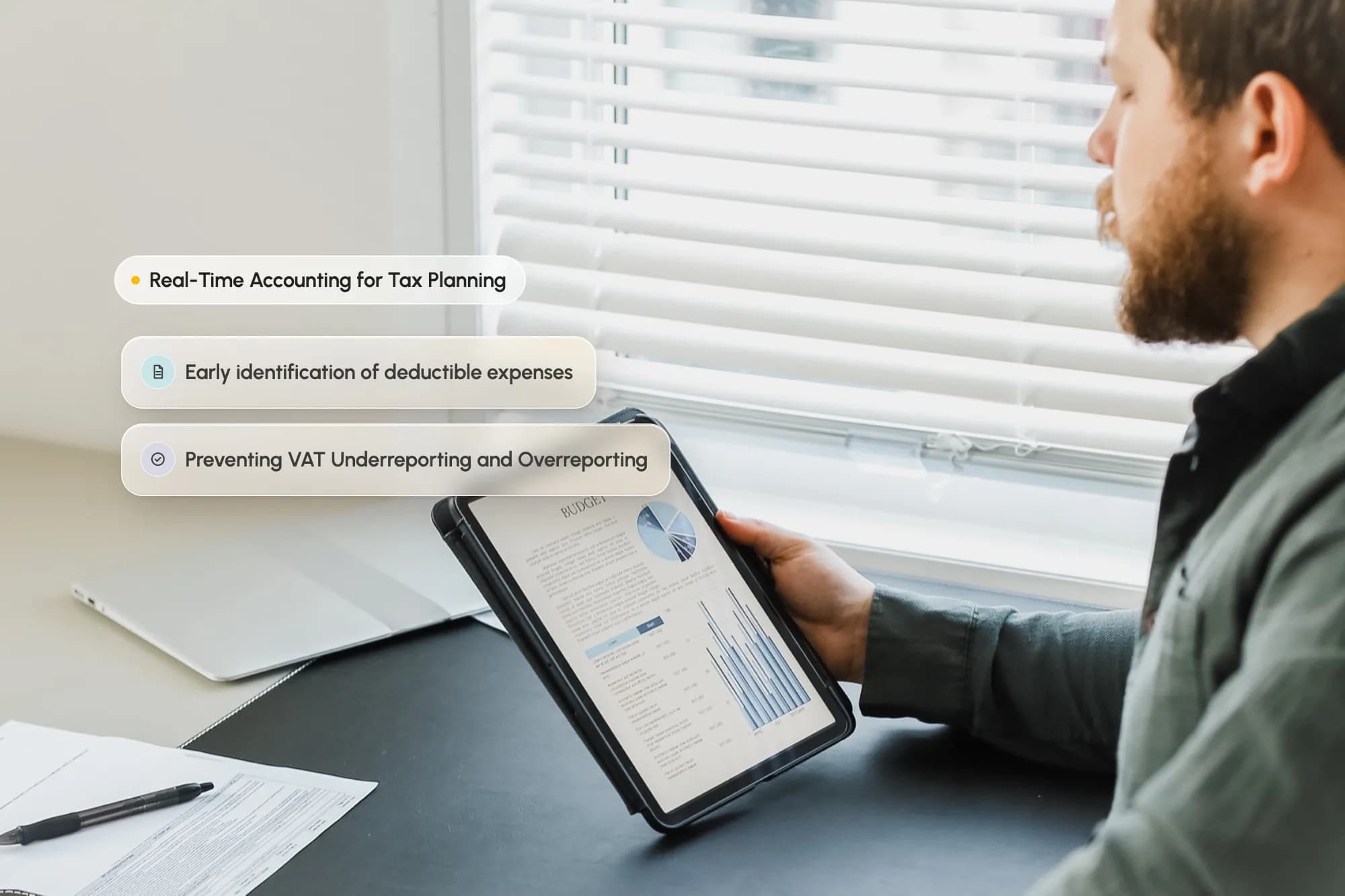
Real-Time Accounting for Tax Planning: How to Maximise UAE Corporate Tax Benefits
The introduction of UAE Corporate Tax has reshaped how businesses approach finance, compliance and strategic planning. Tax is no longer a year-end exercise handled after financial statements are finalised. It has become an ongoing process that requires accuracy, timely reporting and forward-looking decisions.
In this environment, real-time accounting has emerged as an important tool for organisations looking to optimise their tax positions while remaining compliant with UAE regulations.
When integrated with tax planning, real-time accounting gives management immediate visibility into taxable income, deductible expenses and potential compliance risks. For businesses operating in the UAE, this approach can help identify corporate tax efficiencies, improve financial controls and support informed decision-making throughout the year.

Why Real-Time Accounting Matters for UAE Corporate Tax
Under the UAE Corporate Tax framework, taxable income is calculated based on accounting profits, subject to specific adjustments. This direct relationship between accounting records and tax liability means that delays, inaccuracies and inadequate documentation can result in missed deductions, cash flow pressure and regulatory exposure. Real-time accounting helps businesses maintain current and reliable financial records that are better aligned with their tax requirements.
Beyond compliance, it also supports proactive tax planning. Businesses can anticipate their tax positions before year-end, evaluate the financial impact of operational decisions and assess the availability of exemptions, reliefs and incentives under UAE tax law.
Key Benefits of Real-Time Accounting for Tax Planning
Businesses that incorporate real-time accounting into their tax planning can gain benefits that extend beyond reducing tax liabilities. These advantages also influence operational efficiency, financial control and long-term business resilience.
Key benefits include:
- Improved Accuracy in Taxable Income Calculations: Reduces errors, misclassifications and unsupported adjustments that could affect taxable income calculations or lead to tax disputes.
- Enhanced Cash Flow Planning: Provides visibility into projected Corporate Tax liabilities, allowing businesses to plan payments more effectively and manage working capital.
- Stronger Audit Readiness: Maintains current and properly supported financial records that help demonstrate effective internal controls and support responses to Federal Tax Authority reviews.
- Informed Strategic Decision-Making: Enables management to assess the tax implications of investments, restructuring and business expansion when evaluating important decisions.
- Greater Confidence in Compliance: Provides ongoing visibility into financial and tax information, supporting accurate and timely UAE Corporate Tax filings.
How Real-Time Accounting Strengthens UAE Corporate Tax Efficiency
1. Early Identification of Deductible Expenses
Real-time accounting allows businesses to track expenses as they occur and assess their deductibility under UAE Corporate Tax rules. Operational costs, financing expenses and employee-related costs can be reviewed promptly to ensure they are properly documented, classified and allocated. This approach reduces the risk of overlooking allowable deductions and supports accurate adjustments to accounting profits.
2. Continuous Monitoring of Taxable Thresholds and Exemptions
The UAE Corporate Tax regime includes exemptions and reliefs that may depend on income levels, business structures and the nature of business activities. Access to real-time financial data allows businesses to monitor their position against relevant thresholds throughout the year. This is particularly useful for small businesses assessing eligibility for available reliefs and business groups evaluating applicable tax arrangements.
3. Better Alignment with Transfer Pricing and Related-Party Rules
Businesses involved in related-party transactions need to maintain appropriate pricing policies, supporting documentation and disclosures. Real-time accounting supports consistent recording and monitoring of these transactions. Regular reviews can help identify discrepancies early, allowing businesses to address potential issues before year-end adjustments become more complicated.
4. Proactive Use of Losses and Tax Planning Opportunities
Tax losses may provide future tax benefits when they are properly identified, tracked and managed in accordance with UAE Corporate Tax rules. Real-time accounting helps businesses monitor emerging losses, understand their causes and assess potential utilisation opportunities. This forward-looking approach supports more structured tax planning instead of relying on reactive adjustments at the end of the financial year.
5. Seamless Integration with Compliance and Reporting Obligations
Real-time accounting systems can be integrated with Corporate Tax return preparation, financial reporting and audit processes. This integration helps reduce duplicated work, improve reporting efficiency and maintain consistency across statutory filings. As a result, businesses can manage their compliance responsibilities while directing internal resources towards growth and other value-adding activities.
6. Preventing VAT Underreporting and Overreporting
Recording sales and purchases as they occur helps businesses capture output VAT and input VAT more consistently throughout the tax period. This reduces the need for extensive last-minute reconciliations, minimises errors in VAT return submissions to the Federal Tax Authority and lowers the risk of underreporting or overreporting that could lead to penalties or reassessments.
From Real-Time Data to Real Tax Value
Real-time accounting has become an important part of effective tax planning under the UAE Corporate Tax regime. When financial data is accurate, current and regularly reviewed, businesses are better positioned to monitor taxable income, anticipate tax liabilities and make informed decisions throughout the year. Moving from periodic reporting to continuous financial visibility can help organisations protect profit margins, improve cash flow planning and reduce compliance risks in an increasingly regulated business environment.
At HLB HAMT, we support businesses across the UAE with integrated accounting and Corporate Tax advisory services designed for practical business requirements. Our expertise covers real-time accounting implementation, UAE Corporate Tax planning, compliance support and advisory services aligned with Federal Tax Authority requirements.