


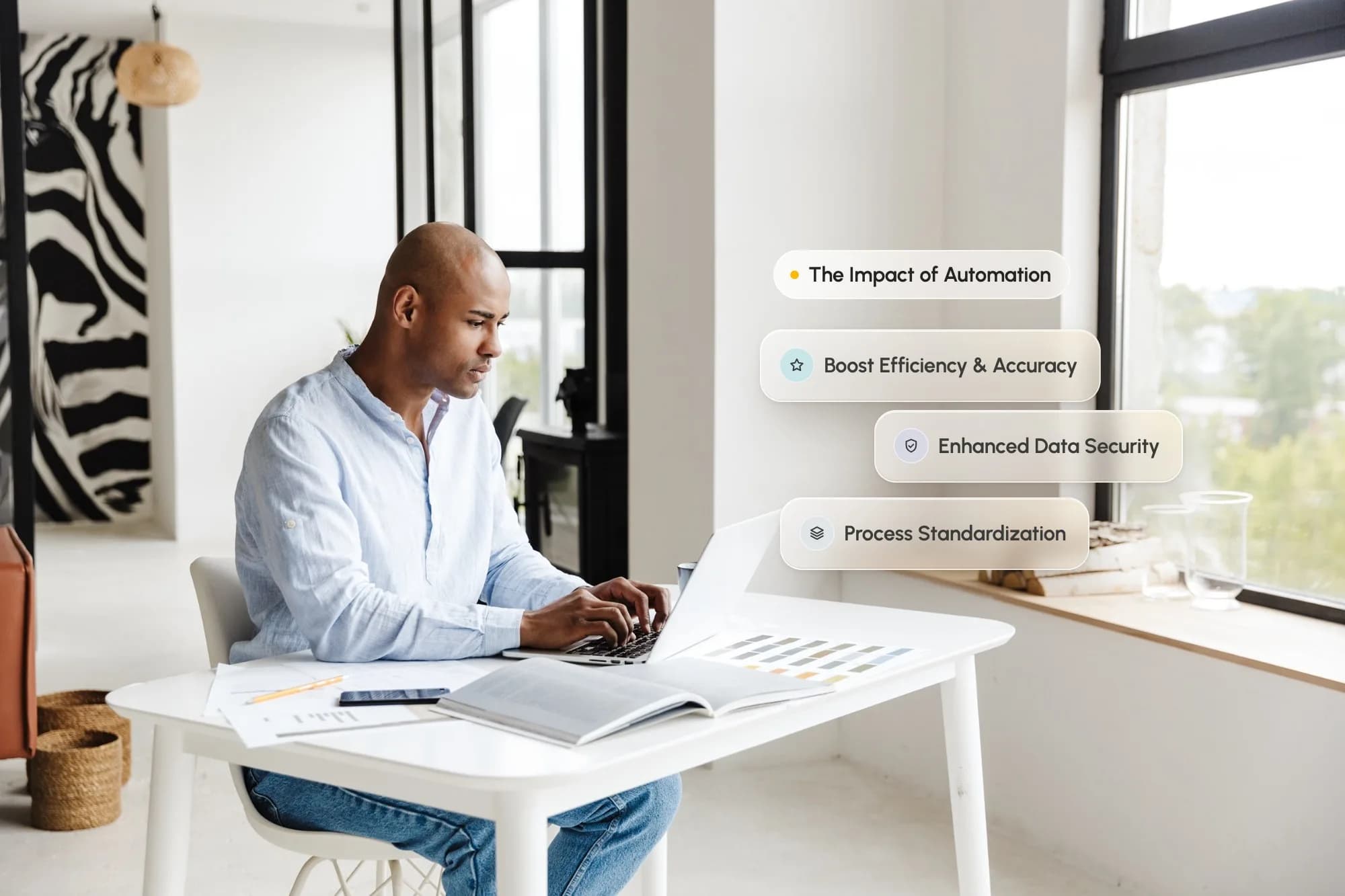
In today’s fast-paced business environment, companies need efficient ways to manage their finances and stay competitive. Automation is changing how accounting and bookkeeping teams handle routine work, from data entry to invoice processing. By reducing repetitive tasks, automation allows finance professionals to spend more time on strategic planning, financial analysis and business growth. This article explores how automation is transforming accounting and bookkeeping practices, the key benefits it offers and how businesses can use Robotic Process Automation (RPA) to streamline their operations.

Automation’s Transformation of Accounting
The growing adoption of automation has reshaped many areas of the accounting profession. By automating routine processes, accountants can dedicate more time to analysis, planning and other value-adding activities. Here are eight key areas where automation is making a difference.
1. Boost Efficiency and Accuracy
Many accounting tasks, including data entry and invoice processing, are repetitive and prone to human error. Automation reduces the need for manual handling, allowing accountants to focus on more strategic work.
Automation tools can also streamline workflows, reduce unnecessary steps and minimise errors caused by manual data manipulation.
2. Real-Time Reporting and Analytics
Traditional accounting methods often require teams to wait until the end of an accounting period to collect and analyse financial data.
Automation can provide faster access to financial information, giving accountants a clearer view of the company’s financial position.
With more timely data, businesses can identify trends, potential issues and opportunities sooner. This supports proactive decision-making and allows teams to respond when financial performance changes.
3. Handle Large Transaction Volumes
Businesses may experience significant increases in transaction volumes during peak periods. Processing these transactions manually can place considerable pressure on accounting teams.
Automation tools can process large volumes of data consistently, helping businesses maintain timely and accurate accounting records even during busy periods.
This can also reduce the delays and errors associated with manual data entry and reconciliation.
4. Enhance Data Security
Financial information is sensitive, making data security a critical consideration for every business.
Automation can support security through controlled user access, standardised procedures and automated security protocols. Depending on the system, additional measures such as encryption can help protect financial information.
Appropriate access controls and security practices also reduce the risk of unauthorised access and errors during routine financial operations.
5. Standardise Processes
Automation helps enforce consistent workflows across the accounting department. Instead of relying on different employees to follow manual procedures, businesses can establish standard processes for recurring tasks.
Standardisation improves consistency in financial records, makes processes easier to monitor and supports more reliable reporting.
6. Enable Data-Driven Finance and Accounting Decisions
Automation tools can integrate with different financial systems and collect information from multiple sources. This makes it easier to consolidate data and generate detailed reports.
With access to more complete datasets and timely analytics, accountants can make informed financial and business decisions based on actual performance rather than intuition or guesswork.
7. Optimise Procure-to-Pay Cycles
The procure-to-pay process covers several stages, from requesting goods and services to processing invoices and making payments.
Automation can streamline activities such as vendor onboarding, purchase order creation and invoice processing. This reduces repetitive administrative work and helps businesses manage the process more efficiently.
8. Support Regulatory Compliance
Accounting and tax requirements can be complex and time-consuming to manage.
Automation can help businesses handle recurring compliance activities, including tax calculations, reporting schedules and record-keeping. These tools can improve consistency and help teams keep track of important deadlines.
However, automated processes still require appropriate configuration, review and oversight to ensure that the business meets its applicable requirements.
HLB HAMT: Streamlining Your Accounting with RPA Technology
HLB HAMT uses Robotic Process Automation (RPA) to help businesses improve accounting operations and reduce the time spent on repetitive tasks. RPA can automate rule-based activities across financial systems, allowing accounting teams to focus on more complex work.

Enhanced Efficiency Across Key Areas
Accounts Payable and Receivable (A/P and A/R)
Automate invoice processing, data entry, vendor management, credit control and payment reconciliation. RPA can extract information, validate data and initiate actions to streamline both accounts payable and accounts receivable processes.
Financial Reporting
Generate accurate and timely reports with less manual effort. RPA can automate data collection, consolidation and analysis across different sources, helping finance teams prepare reports more efficiently.
Expense Management
Simplify the management of employee expense reports. RPA can extract information from receipts, validate expenses and update accounting systems to support smoother reimbursement processes.
General Ledger and Bank Reconciliation
Automate the reconciliation of transactions and balances across the General Ledger (GL) and sub-ledgers. RPA can identify discrepancies and support their resolution. It can also streamline bank statement reconciliation by matching transactions and updating accounting records.
Financial Data Migration
Make transitions between accounting systems more efficient. RPA can automate data extraction, transformation and loading, helping businesses migrate financial information with less manual effort and disruption.
Why Choose HLB HAMT for Your Automated Accounting Journey? Every business has different accounting workflows, systems and operational requirements. HLB HAMT takes a structured approach to RPA implementation, helping businesses identify suitable automation opportunities and integrate solutions into their existing processes.
Here is what sets our approach apart.
Expert Evaluation
Our team analyses your existing workflows to identify processes that are suitable for automation. We focus on areas where RPA can make a meaningful difference to efficiency and accuracy.
Seamless Integration
Our RPA specialists work to integrate automation solutions with your existing accounting systems. This helps reduce data silos and supports a smoother transition with minimal operational disruption.
Ongoing Support
Implementation is only one part of the process. HLB HAMT provides ongoing support and staff training to help your team use the technology effectively.
Sustainable Transformation
We work with businesses to build sustainable automation processes. By reducing repetitive accounting work, RPA can give finance teams more time to focus on analysis, planning and strategic activities.
With 25 years of experience and industry expertise in the UAE, HLB HAMT helps businesses explore RPA solutions suited to their accounting requirements. Our understanding of the Dubai business environment allows us to consider the operational challenges and opportunities relevant to local businesses.