


Key takeaways
- Essential factors for running compliant payroll in Oman in line with local labour laws
- Clear guidance on SPF contribution rates, obligations, and statutory deadlines
- Practical guidance on End of Service Gratuity calculation and monthly accruals
- Complete overview of statutory leave entitlements under Oman Labour Law
- How Nova VU automates the entire Oman payroll process — from HRMS sync to payslip
- How HLB HAMT integrates with SAP SuccessFactors, Oracle HCM, HiBOB, and Workday via API
Running payroll in Oman is not a back-office function. It is a compliance obligation that touches every aspect of your workforce operations. Between Social Protection Fund (SPF) contributions, Wage Protection System (WPS) filing requirements, End of Service Gratuity calculations, statutory leave entitlements, and complex payroll accounting rules, even a well-resourced HR team can find itself stretched thin. With Oman’s labour regulations continuing to evolve, the cost of getting it wrong, including penalties, employee disputes, and reputational damage, is higher than ever.

This 2026 Oman Payroll Processing Guide cuts through the complexity. Written by HLB HAMT’s payroll specialists, with more than 25 years of in-region experience, it gives HR directors, CFOs, and business owners a practical, plain-English reference for every major payroll obligation in Oman. It also explains how HLB HAMT’s Nova VU payroll platform automates the entire process, end to end, with 100% statutory compliance and zero manual workarounds.
Oman Nationwide Coverage
SPF Compliance
WPS Upload Status
Total Employees
Active employees
Payroll Run Status
60%In Progress
Pay Date : 20 Jun 2027
Social Protection Fund (SPF): Rates, Obligations, and Compliance in Oman
The Social Protection Fund (SPF) is Oman’s statutory social insurance system, providing pension coverage, occupational hazard protection, and unemployment insurance to eligible employees. For employers operating in Oman, SPF compliance is a non-negotiable payroll and HR responsibility. Every eligible Omani national employee must be registered, contributions must be accurately calculated each month, and filings must be submitted within statutory deadlines.
SPF Contribution Rates in Oman (2026)
SPF contributions apply to Omani national employees, with a monthly salary cap of OMR 3,000
Contribution Type
SPF Employee Contribution
- Rate
- 7.50%
- Calculation Base
- Total Salary
- Salary Cap
- OMR 3,000
Contribution Type
Job Security Employee Contribution
- Rate
- 0.50%
- Calculation Base
- Total Salary
- Salary Cap
- No Cap
Contribution Type
Total Employee Contribution
- Rate
- 8.00%
- Calculation Base
- —
- Salary Cap
- —
Contribution Type
SPF Employer Contribution
- Rate
- 12.00%
- Calculation Base
- Total Salary
- Salary Cap
- OMR 3,000
Contribution Type
Job Security Employer Contribution
- Rate
- 0.50%
- Calculation Base
- Total Salary
- Salary Cap
- No Cap
Contribution Type
Maternity Insurance (Employer)
- Rate
- 1.00%
- Calculation Base
- Total Salary
- Salary Cap
- No Cap
Contribution Type
Total Employer Contribution
- Rate
- 14.5%
- Calculation Base
- —
- Salary Cap
- —
Contribution Type
Insurance of Sick Leave and Non-Ordinary Leaves
- Rate
- 1%
- Calculation Base
- Base Total
- Salary Cap
- No Cap
Employer Obligations Under SPF
While employers may deduct the employee’s share through payroll, they remain fully responsible for:
Accurately calculating both employee and employer SPF contributions each month
Deducting and remitting all portions on time, within prescribed statutory deadlines
Managing ongoing SPF portal administration, including employee registrations and updates
Preparing and submitting monthly contribution invoices and reports
How HLB HAMT Manages SPF Compliance for Clients
End-to-end SPF portal administration, including registrations, updates, and monthly processing
Automated SPF calculations with separate contribution reports for each employee and department
Invoice generation and payment coordination to ensure zero late submissions
A complete audit trail maintained for each payroll cycle to support inspection readiness

Oman Wage Protection System (WPS): Ensuring Timely and Compliant Salary Payments
The Wage Protection System (WPS) in Oman is a government-mandated electronic salary transfer mechanism operated by the Ministry of Labour and the Central Bank of Oman. Its purpose is to ensure that all registered employees in the private sector receive their salaries correctly, in full, and on time, creating a fully auditable record of every salary disbursement.
How HLB HAMT Supports WPS Compliance
Full support with registering companies on the WPS system and managing ongoing compliance
Preparation and delivery of WPS-formatted salary upload files, tailored to each bank's specifications
Quality checks to ensure every WPS file conforms to Central Bank of Oman guidelines before submission
Automated WPS file generation through Nova VU, eliminating manual data entry and format errors
Success Stories from Our Valued Clients
When our company opened its AIM Headquarters in UAE, one of the key stakes in our operation is set-up Payroll and Accounting. That is when our partnership with HLB HAMT started way back in 2010, on winning the bid with other outsourcing firms. HLB HAMT’s team learned our processes from scratch and were able to take it fully very quickly. They have proven themselves in the field of payroll and accounting and I found them to be knowledgeable, fast, friendly and most importantly, cost effective. It was a pleasure doing business with HLB HAMT!”
End of Service Gratuity in Oman: Calculation, Accruals, and Compliance
End of Service (EOS) Gratuity is a statutory entitlement under Oman Labour Law. Eligible expatriate employees are entitled to a lump-sum gratuity payment upon termination or completion of their employment contract. Gratuity is calculated on the employee’s last drawn basic salary, at the rate of one full month’s basic salary for each year of service.
Gratuity Services Included in HLB HAMT Payroll Outsourcing
Monthly gratuity accrual reports for each eligible employee
Automated adjustments for unpaid leave periods in both accrual and final settlement calculations
Detailed End of Service calculation sheets prepared in line with Oman Labour Law
Accounting entries and monthly journal vouchers (JV) for gratuity provisions
Annual gratuity summary reports for audit, MIS, and financial planning purposes
Support in addressing audit queries and compliance reviews
Oman Payroll Processing
End of Service Gratuity
Statutory Leave Entitlements Under Oman Labour Law
Oman Labour Law establishes a comprehensive range of statutory leave entitlements that private sector employers must provide to eligible employees. Failure to comply, whether through incorrect leave tracking, miscalculating deductions, or denying entitled leave, creates both legal liability and employee dissatisfaction.
Leave Entitlements and Pay Rules
Leave Type · Entitlement & Pay Rule
- Annual Leave30 days per year (after 6 months).
- Sick LeaveDays 1–21: 100% salary | Days 22–35: 75% | Days 36–70: 50% | Days 71–182: 35%
- Maternity Leave98 days at full pay
- Hajj Leave15 calendar daysAt least 1 year of continuous service with the same employer. Available once during the employee's period of service
- Paternity Leave7 days
- Marriage Leave3 days
- Examination LeaveUp to 15 days (Omani employees)
- Compassionate Leave (Spouse/Child)10 days
- Compassionate Leave (Parent/Sibling/Grandparent)3 days
- Compassionate Leave (Extended Relatives)2 days
Oman Statutory Leave
Statutory Leave in Oman
Employee Self-Service (ESS) Leave Management with HLB HAMT
HLB HAMT provides an integrated ESS portal for leave management, giving employees, managers, and HR teams full visibility and control over leave across the organisation:

- 01
Online leave application by employees
available 24/7 via web or mobile
- 02
Predefined multi-level approval workflows configured to match each company's internal hierarchy
- 03
Automatic payroll integration once leave is fully approved
ensuring accurate salary deductions without manual intervention
- 04
System-enforced entitlement tracking, preventing leave errors such as over-approvals or incorrect deduction rates
- 05
Full leave balance visibility for employees and real-time team leave tracking for managers and HR
Overtime Regulations and Automated Calculations in Oman
Under Oman Labour Law, overtime applies when an employee works beyond their contractually defined normal working hours. The statutory overtime compensation rates are:
+25%
Daytime Overtime
Basic hourly wage plus at least 25%.
+50%
Night Overtime
Basic hourly wage plus at least 50%.
+100%
Weekly Rest Day or Public Holiday
Daily basic wage plus 100%, or compensatory leave.
HLB HAMT’s payroll system processes overtime based on approved hours provided by the client. It can be configured to calculate overtime on basic salary or on basic salary plus selected fixed allowances. This accommodates a range of company-specific overtime policies while remaining aligned with statutory minimums.

Overtime Processing Through the ESS Portal
Employees can submit overtime requests directly through HLB HAMT’s ESS portal. Approval workflows are predefined according to each company's reporting hierarchy. Once overtime is fully approved, it flows automatically into the payroll run, with no manual re-entry, no risk of unapproved payments, and a complete approval audit trail. Every payslip includes overtime as a distinct and transparent line item.
Salary Structure and Deductions
Salary Structure, Pay Components, and Statutory Deductions in Oman
Salary Payment Cycle and Currency
Salary payments in Oman are made on a monthly or bi-weekly basis, depending on the employment contract type. All salary payments must be made in Omani Rials (OMR), unless payment in another currency legally traded in the Sultanate of Oman has been agreed upon.
Pay Components and Salary Structure
Oman Labour Law does not prescribe mandatory salary components. However, a typical Oman payroll structure includes:
Fixed Components:
Basic Salary, Housing Allowance, Transport Allowance, and other contractual allowances
Variable Components:
Overtime, Sales Commission, Bonus, Performance Incentives, Relocation Allowance, Mobile Allowance
HLB HAMT’s payroll system supports unlimited pay codes, with no restriction on the number of earnings or deduction components. New pay codes can also be created at any time without additional charges.
Statutory Deductions in Oman
Employee Benefits Management: Air Tickets, Bonuses, and Policy-Driven Automation
Managing employee benefits in Oman, from annual air ticket entitlements to bonus accruals, requires precise calculations, consistent policy application, and accurate financial provisioning. HLB HAMT automates the full lifecycle of benefit administration through Nova VU, eliminating manual tracking and calculation errors.

Air Ticket Entitlement Management
Automated calculation of annual or biannual air ticket entitlements based on employee grade or company-defined eligibility rules
Support for multiple entitlement structures: Self, Self + Spouse, or Full Family
Application of approved home-country routes and standard fare rates
Automatic payment processing in the designated payroll cycle or anniversary month — with zero manual intervention
Bonus and Incentive Management
- Monthly bonus accrual calculations aligned with client performance and remuneration policies.
- Separate bonus accrual reports and journal entries for accurate financial provisioning
- Scheduled bonus payments processed according to the employer's defined payout schedule
Payroll Accounting and MIS
Payroll Accounting, GL Integration, and MIS Reporting
Payroll accounting is the systematic recording and reporting of all compensation-related financial transactions, including salaries, overtime, bonuses, allowances, deductions, employer contributions, and accruals. In Oman, accurate payroll accounting is essential not only for internal financial transparency but also for statutory compliance, audit readiness, and management reporting.
HLB HAMT delivers a fully integrated payroll accounting solution that eliminates manual journal entries and ensures real-time accuracy in every organisation’s financial statements.
Key Payroll Accounting Capabilities
Fully automated General Ledger (GL) posting — Every payroll run generates complete, structured journal entries without manual intervention
GL mapping and cost allocation rules aligned with each client's organisational structure, cost centres, and departmental hierarchies
Dynamic GL mapping to accommodate changes in organisational structure, employee transfers, or policy updates
Payroll accrual accounting for EOS Gratuity, air ticket provisions, annual leave, and bonus accruals
Classification of payroll expenses as direct or indirect costs, with multi-GL-code allocation per pay component
Expense reclassification for employees transferred between departments or cost centres
Seamless Integration with ERP and HRMS Systems
Nova VU integrates with leading enterprise platforms via API to eliminate data silos and enable end-to-end payroll automation:
End of Service Settlement
End of Service Benefits Settlement: What's Included
When an employee’s service ends in Oman, the final settlement must be calculated accurately and settled promptly. A typical Oman End of Service settlement includes:
End of Service Gratuity
Calculated in accordance with Oman Labour Law, based on the employee’s last drawn basic salary
Repatriation Air Ticket
Where applicable, as per company policy or employment contract
Notice period salary or payment in lieu of notice, as applicable
Payment for Unutilised Annual Leave Balance
Any outstanding allowances, earnings, or payroll adjustments
Salary due up to the employee's last working day
HLB HAMT prepares a complete, signed EOS calculation sheet for each employee. It is reviewed against Oman Labour Law entitlements, with full supporting documentation provided for audit and finance sign-off.
Oman End of Service Gratuity
End of Service Settlement in Oman
Nova VU Automation
How Nova VU Automates the Entire Oman Payroll Process
Nova VU is HLB HAMT’s proprietary, fully automated payroll processing platform, built, maintained, and continuously improved by HLB HAMT’s in-house payroll technology team. It is not generic payroll software. It is an end-to-end payroll automation engine purpose-built for the GCC compliance environment and sits at the heart of every payroll run HLB HAMT processes for its Oman clients.
The Nova VU Payroll Workflow: From HR Data to Payslip
HRMS Data Sync via API
New hires, changes, leave, and terminations
Validation and Compliance Checks
Multi-layer anomaly detection
Payroll Calculation
SPF, overtime, leave, gratuity, and all statutory rules
Statutory Filings
SPF files and WPS upload files generated
GL Journal Posting
Automated entries to ERP/accounting system
Payslips and MIS Reports
Delivered to employees and management
Error-Free Payroll: How Nova VU Eliminates Calculation Errors
HLB HAMT has been delivering payroll outsourcing services across the GCC for over 25 years. Our Oman payroll offering is not a standard managed service. It is a fully integrated, technology-driven partnership built around compliance, automation, and measurable business value.
Why HLB HAMT
Why Outsource Oman Payroll to HLB HAMT?
Outsourcing payroll is a strategic decision, not just an operational one. The right partner does not simply process salaries. They help eliminate compliance risks, deliver financial intelligence, integrate seamlessly with existing systems, and scale with your business. HLB HAMT provides these services, backed by more than 25 years of GCC payroll expertise and a proprietary technology platform built for the region.

The HLB HAMT Advantage
Fast Go-Live
live in as little as 10 days for SME payrolls, without operational disruption.
No Lock-in
No minimum contractual commitment. Stay because the service works.
100% Compliance
SPF, WPS, gratuity, overtime, and leave are maintained automatically.
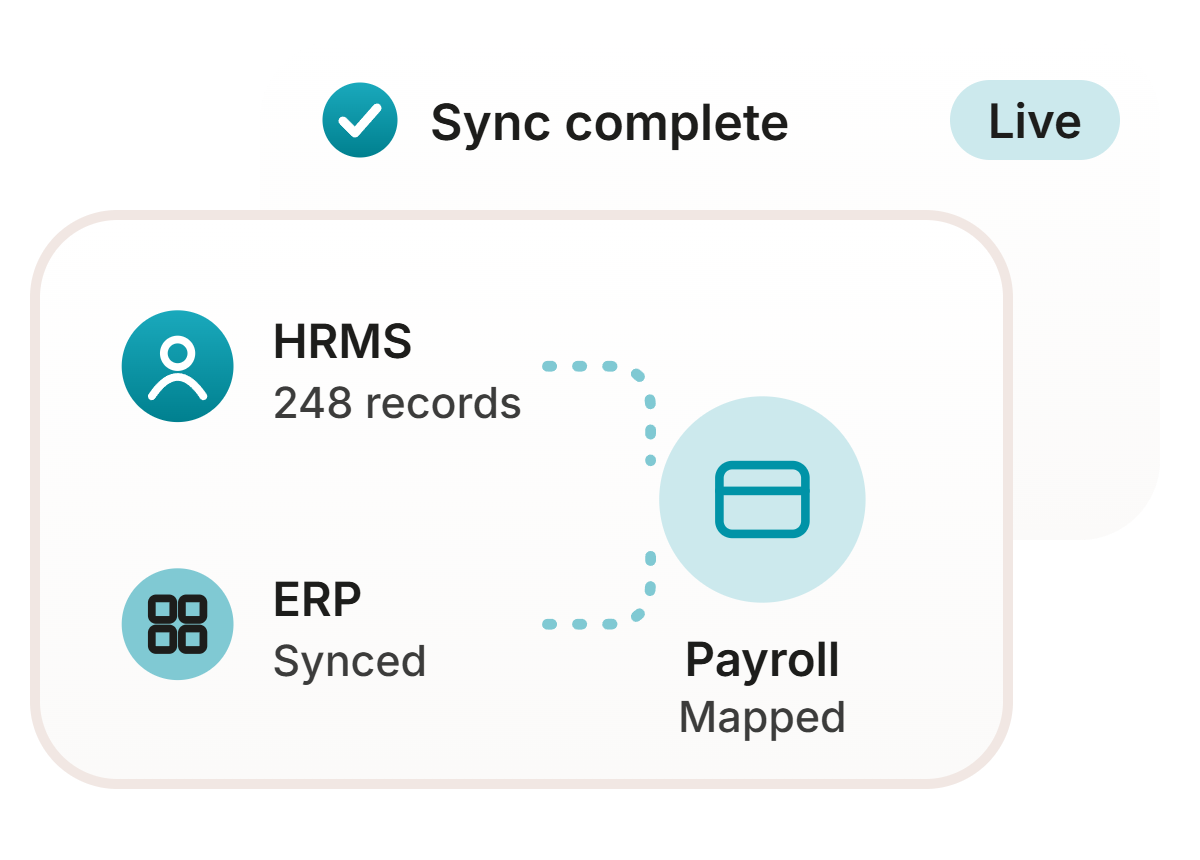
HRMS Integration
API connections with SAP SuccessFactors, Oracle HCM, HiBOB, and Workday.
Audit-Ready, Always
Clean calculations, complete statutory trails, and structured documentation.
MIS & GL Reporting
Deep payroll accounting, cost centre allocation, and management dashboards.
What Sets HLB HAMT Apart
- More than 25 years of GCC payroll expertise across Oman, UAE, Saudi Arabia, Qatar, Bahrain, Kuwait, and beyond
- Integrated professional services, with payroll outsourcing aligned with in-house tax, audit, and advisory capabilities
- Proprietary Nova VU platform, purpose-built for GCC payroll automation rather than a third-party tool
- HRMS/ERP API integrations with SAP SuccessFactors, Oracle HCM, HiBOB, and Workday
- Employee Self-Service (ESS) portal for leave, overtime, and payslip access
- Member of HLB International, a top-8 global advisory network
FAQ
Frequently Asked Questions
- Days 1–21: 100% of gross wage
- Days 22–35: 75%
- Days 36–70: 50%
- Days 71–182: 35%
Employers should also account for the applicable Social Protection Fund sickness and unusual-leave insurance requirements.
About the Author

CMA Muhammed Naseer
Associate Director – Payroll · HLB HAMT
Cost and Management Accountant (CMA), ICMAI · 16+ years in finance, payroll and HR compliance
Naseer is a qualified Cost and Management Accountant (CMA) from the Institute of Cost and Management Accountants of India (ICMAI) and a seasoned payroll specialist with over 16 years of professional experience in Finance, Payroll Processes, and HR Compliance.
As an Associate Director of Payroll at HLB HAMT, he works closely with a diverse portfolio of multinational and regional clients, developing strong and long-standing relationships through consistent service excellence and a deep understanding of organizational needs. He currently oversees comprehensive payroll operations for companies across the GCC, ensuring accuracy, statutory compliance, and robust process optimization.