


Key takeaways
- Essential factors for running compliant payroll in the Dubai Development Authority (DDA) free zones under applicable UAE labour laws.
- Clear guidance on GPSSA registration, contribution rates, GCC social security obligations, and employer responsibilities.
- Practical guidance on End of Service Benefits (EOSB), gratuity calculations, and the voluntary alternative savings scheme.
- An overview of statutory leave, employee benefits, and working-hour requirements.
- How Nova VU automates payroll processing, validation, accounting, and reporting.
- How structured payroll accounting supports financial control, transparency, and reliable MIS reporting.
- How HLB HAMT helps organisations manage DDA payroll processing with compliance, accuracy, and meaningful reporting.
Managing payroll across Dubai Development Authority (DDA) free zones demands more than a spreadsheet and a compliance checklist. GPSSA obligations, GCC social security contributions, gratuity accruals, multi-currency processing, statutory leave tracking, and overtime calculations all converge in a single monthly payroll cycle.
Businesses operating in Dubai Internet City, Dubai Media City, Dubai Knowledge Park, and other DDA communities need to manage these responsibilities alongside their own internal HR and financial controls. Semi-manual payroll processes can create regulatory exposure, audit gaps, inaccurate employee settlements, and unnecessary work for finance teams.
This guide covers the essential aspects of DDA payroll processing and compliance in 2026. It also explains how HLB HAMT's Nova VU platform supports a more automated, controlled, and audit-ready payroll operation.

DDA free zone payroll compliance
Payroll Status : Active


EOS accruals
Leave balances
Overtime approvals
GPSSA contributions
92,400AED
Dubai Development Authority (DDA)
What Is the Dubai Development Authority?
The Dubai Development Authority (DDA) is a government entity established by the Emirate of Dubai to regulate, develop, and oversee specialised economic zones, business districts, and innovation communities. It plays an important role in Dubai's economic diversification strategy and serves as the regulatory authority for businesses operating within its designated communities.
DDA-registered businesses operate across several free zones and communities, including:
- Dubai Internet City (DIC)
- Dubai Knowledge Park (DKP)
- Dubai Studio City
- Dubai Media City (DMC)
- Dubai International Academic City (DIAC)
- Dubai Production City
- Dubai Science Park
- Dubai Design District (d3)
- Dubai Outsource City
Businesses operating in these communities must follow the applicable DDA employment and sponsorship procedures alongside relevant UAE federal legislation. Federal Decree-Law No. 33 of 2021, concerning the Regulation of Employment Relationships, and its subsequent amendments form an important part of the employment-law framework.
The applicable rules can depend on the employee's status, the employer's registration, and the relevant free zone's procedures. Employers should therefore confirm the regulatory requirements applicable to their specific licence and workforce rather than assume that every UAE payroll rule applies in exactly the same way.
For the current regulatory documents, refer to the Dubai Development Authority's Laws and Regulations database.
Social Security Contribution
GPSSA Social Security Compliance in the DDA
Employers operating in DDA communities must account for pension and social security obligations when employing eligible UAE nationals. Registration and contributions are governed by the applicable pension legislation, including Federal Decree-Law No. (57) of 2023 on Pension and Social Security.
The contribution framework differs depending on whether the employee is covered by the previous pension law or the 2023 law. Payroll teams must identify the correct framework before calculating monthly deductions and employer contributions.
GPSSA Registration Obligations
GPSSA's published employer guidance requires registration within 30 days of the employee joining service. Employers should also ensure that employee information, contribution account salary, and monthly contribution records are accurate.
Key employer responsibilities include:
- Registering eligible UAE national employees with GPSSA within the prescribed deadline.
- Identifying whether the employee falls under the previous or new pension law.
- Calculating and remitting monthly employee and employer contributions.
- Maintaining accurate contribution account salary records.
- Reporting employee departures and completing the relevant deregistration or end-of-service procedures.
- Reconciling GPSSA statements and payment records with payroll reports.
GPSSA's published FAQ states that employers must notify the authority of employees whose service has ended within a maximum of one month from the termination date. Employers should follow the latest applicable GPSSA process and any specific notification deadline communicated through the authority's platform.
GPSSA Contribution Rates in 2026
Contribution rates differ according to whether the employee is covered by the previous law or the new law.
Old Law: Federal Law No. 7 of 1999
Details
- Applicable to
- UAE nationals covered by the previous law
- Maximum contribution account salary
- AED 50,000
- Employee contribution
- 5%
- Employer contribution
- 12.5%
- Government contribution
- 2.5%
- Total contribution
- 20%
This framework generally applies to UAE nationals who were employed and insured under the previous pension regime before the new law took effect.
New Law: Federal Decree-Law No. (57) of 2023 on Pension and Social Security
Details
- Applicable to
- First-time contributors from 31 October 2023
- Minimum contribution account salary
- AED 3,000
- Maximum contribution account salary
- AED 70,000
- Employee contribution
- 11%
- Employer contribution where salary is below AED 20,000
- 12.5%
- Government support where salary is below AED 20,000
- 2.5%
- Employer contribution where salary is AED 20,000 or above
- 15%
- Government support where salary is AED 20,000 or above
- 0%
- Total contribution
- 26%
The new framework applies to first-time contributors registered with GPSSA from 31 October 2023 onwards, subject to the law's applicable eligibility and transitional provisions.
Important clarification on the government contribution
Under the new pension law, the UAE Government supports eligible private-sector employers by bearing 2.5 percentage points of the employer's 15% contribution where the employee's contribution account salary is below AED 20,000.
For salaries of AED 20,000 or above, the employer bears the full 15% contribution. The employee's contribution remains 11%, bringing the total contribution to 26%.
The contribution account salary is subject to the prescribed minimum and maximum limits. It should not be confused with the employee's gross monthly salary or basic salary alone. The applicable salary components must be determined under the pension legislation.
Source: GPSSA: Features of Federal Law No. 57 of 2023 and GPSSA Monthly Contribution Employer Guideline.
GCC Nationals: Insurance Protection Extension System
GPSSA compliance is not limited to UAE nationals. Employers in DDA free zones must also consider the social security obligations applicable to employees who are citizens of other Gulf Cooperation Council (GCC) countries.
Under the GCC Insurance Protection Extension System, GCC nationals working in another GCC member state are generally covered by the social insurance system of their home country.
For example, a Saudi national employed by a DDA-registered company in Dubai may need to be registered under the Saudi social insurance system through the UAE's insurance protection extension arrangements.
The employer's responsibilities include:
- Registering eligible GCC national employees through the applicable GPSSA coordination process.
- Submitting the unified insurance protection form and supporting employee documents.
- Applying the contribution rates and salary rules of the employee's home country.
- Paying contributions within the applicable deadlines.
- Completing the required end-of-service notification and settlement procedures when employment ends.
- The applicable contribution rates differ by GCC country. Employers should not apply the UAE national GPSSA contribution table to GCC employees without checking the relevant home-country requirements.
- Source: GPSSA: Registration of GCC Nationals and GPSSA: GCC Insurance Protection Extension Programme.
How HLB HAMT Manages GPSSA Compliance
HLB HAMT's DDA payroll outsourcing service supports the GPSSA compliance lifecycle through structured payroll administration and reporting.
New employee registration
Coordination of employee registration through the GPSSA platform within the applicable statutory deadlines.
Monthly contribution calculations
Calculations under the previous and new pension frameworks, with employee classification based on the applicable pension rules and joining details.
GCC social security administration
Support with the registration and contribution requirements applicable to GCC nationals under the Insurance Protection Extension System.
Employee exit processing
Coordination of employee deregistration, end-of-service notifications, and final contribution reconciliation.
Payment and reconciliation
Validation of contribution statements and pro forma invoices, followed by payment coordination according to the agreed process.
Monthly contribution reporting
Separate monthly GPSSA contribution reports for audit, governance, and management information purposes.
Alfred John
Spain · Expatriate · End of Service Gratuity
- Auto-assigned by system
- ✓
Ahmed Imam
UAE · National · GPSSA Contribution
Nadia Hameed
Egypt · Expatriate · End of Service Gratuity
- Auto-assigned by system
- ✓
Employee benefit classification is assigned according to the applicable statutory scheme and configured payroll rules.
Wage Protection System (WPS) in the DDA
WPS applicability depends on the employer's regulatory registration and the authority responsible for its employment administration. DDA-administered free zones, including Dubai Internet City, Dubai Media City, and Dubai Design District, have generally been treated as outside the MoHRE WPS framework.
This is different from companies registered with MoHRE and subject to its WPS requirements. Employers should confirm their specific status with DDA and their relevant banking or payroll partners rather than assume that the exemption applies to every business operating in Dubai.
WPS Update: Ministerial Resolution No. 340 of 2026
MoHRE introduced Ministerial Resolution No. 340 of 2026 concerning the Wage Protection System. The updated framework establishes a unified salary due date for establishments registered with MoHRE, with wages for the previous month generally due on the first day of each Gregorian month.
The resolution also introduces a graduated response to delayed salary payments and requires covered establishments to transfer at least 85% of wages due on time, subject to applicable deductions and the resolution's provisions.
What does this mean for DDA employers?
The resolution is directed at establishments registered with MoHRE and operating within the applicable WPS framework. DDA-registered companies that are outside this framework should not automatically treat the MoHRE WPS deadlines as their own statutory payment mechanism.
However, this does not remove an employer's obligation to pay employees on time and in full under the applicable employment contract and labour legislation. Companies should also check whether their bank, group policy, or contractual arrangements impose additional salary payment and reporting requirements.
UAE End of Service Gratuity Policy
End of Service Gratuity in the DDA
Eligibility
End of Service (EOS) Gratuity is a statutory entitlement for eligible expatriate employees under Article 51 of Federal Decree-Law No. 33 of 2021, as amended.
For employees covered by the standard private-sector gratuity system, eligibility generally begins after completing at least one year of continuous service. UAE nationals are covered by the applicable pension and social security framework rather than the standard expatriate gratuity calculation.
GCC nationals are generally covered by the social security arrangements of their home countries under the Insurance Protection Extension System. Employers must also consider any gratuity rights accrued before the employee became covered by the applicable insurance scheme.
Gratuity Calculation Formula
For eligible expatriate employees covered by the standard gratuity system:
First 5 years of service
21
days’ basic salary for each completed year
From year 6 onwards
30
days’ basic salary for each completed year
Maximum cap
Total gratuity is limited to two years’ total salary
Unpaid absence days are excluded when calculating the period of service for gratuity purposes. Eligible fractions of a year are calculated proportionately once the employee has completed the required minimum service period.
Important clarification: The maximum gratuity cap is two years' wage. It should not be described as two years' total salary, as this may incorrectly suggest that allowances and other benefits are included in the calculation.
Under Article 53 of Federal Decree-Law No. 33 of 2021, employers must pay the employee's outstanding wages and other entitlements within 14 days from the end of the employment contract.
This includes applicable gratuity, unused leave compensation, and other outstanding contractual or statutory dues.
Sources: UAE Government: End-of-Service Benefits and UAE Labour Law and Amendments.
Voluntary Alternative End-of-Service Savings Scheme
Employers in the UAE private sector, including eligible free zone employers, may choose to participate in the voluntary Alternative End-of-Service Benefits Scheme introduced under Cabinet Resolution No. 96 of 2023.
Instead of continuing with the traditional gratuity arrangement for selected employees, an employer can subscribe to an approved investment fund and make monthly contributions on their behalf.
Under the standard contribution structure:
Employee's Continuous Service
Employer's Monthly Contribution
- Less than 5 years
- 5.83% of monthly basic salary
- More than 5 years
- 8.33% of monthly basic salary
Participation is voluntary for employers. Once an employer opts into the scheme and selects the eligible employee categories, the applicable scheme obligations must be followed.
Employers must also account for gratuity accrued before an employee enters the alternative scheme. Previously accrued benefits are preserved and remain payable according to the applicable rules.
This option is relevant for DDA employers evaluating different approaches to end-of-service liability management, employee benefits, and long-term financial planning.
Source: Cabinet Resolution No. 96 of 2023: Alternative End-of-Service Benefits System.
How HLB HAMT's Payroll System and Nova VU Support DDA Gratuity Processing
HLB HAMT's Nova VU platform supports the gratuity lifecycle through automated calculations, validation, reporting, and settlement checks.
Automated allocation and Accrual
HLB Payroll System classifies employees according to nationality and applicable benefit schemes. It calculates monthly gratuity accruals using key payroll information, including:
Salary Change Validation
When an employee's basic salary changes, HLB Payroll System recalculates the gratuity liability and updates the relevant reports. Nova VU reviews the changes and identifies unusual variances or potential under- or over-accruals for further review.
EOS Calculation Sheets and Final Settlement
For employee exits, HLB Payroll System generates detailed EOS calculation sheets covering:
Technology driven Payroll Validation
Nova VU's Rules Engine reviews payroll and gratuity reports to identify anomalies, inconsistencies, and compliance exceptions. This validation layer helps employers improve payroll accuracy, strengthen compliance controls, and maintain an audit-ready process with less manual review.
Success Stories from Our Valued Clients

General Manager -MICHELIN AIM FZCO
Mr. Reyjie Cruz
General Manager

“When our company opened its AIM headquarters in UAE, setting up payroll and accounting was a key stake. HLB HAMT learned our processes from scratch and took it over fully — knowledgeable, fast, friendly, and most importantly, cost effective.”
Statutory Leave Entitlements in the DDA
DDA employers must administer statutory leave entitlements in line with the applicable UAE labour legislation and relevant free zone requirements. Federal Decree-Law No. 33 of 2021 and its amendments provide the principal framework for many private-sector employment entitlements.
The following table summarises the main leave categories and entitlements.
Leave Type
Entitlement
- Annual Leave
- 30 days per year after one year of service; 2 days per month where service is between 6 and 12 months
- Sick Leave
- 15 days at full pay, followed by 30 days at half pay and 45 days unpaid
- Maternity Leave
- 45 days at full pay, followed by 15 days at half pay
- Parental Leave
- 5 working days
- Study Leave
- 10 working days per year for eligible employees
- National Service Leave
- Paid leave for eligible UAE nationals performing national service
- Bereavement Leave
- 5 days for the death of a spouse; 3 days for the death of a parent, child, sibling, grandparent, or grandchild
Important Leave Eligibility Conditions
Annual leave Employees are entitled to 30 days of paid annual leave after completing one year of service. Employees who have completed more than six months but less than one year are entitled to two days per month.
Sick leave The statutory sick leave entitlement applies after the employee completes the probationary period. During probation, an employer may grant unpaid sick leave based on a medical report issued by a recognised medical authority.
After probation, the standard entitlement is:
- First 15 days: Full pay
- Remaining 45 days: Unpaid
Study leave An employee studying at an accredited educational institution in the UAE may be entitled to 10 working days of paid study leave per year to sit for examinations, provided they have completed at least two years of service with the employer.
Parental leave Eligible employees are entitled to five working days of parental leave, which can be taken within six months of the birth of a child.
Bereavement leave Employees are entitled to paid bereavement leave according to the relationship with the deceased:
- Five days for the death of a spouse.
- Three days for the death of a parent, child, sibling, grandparent, or grandchild.
Maternity leave Female employees are entitled to 60 days of maternity leave, comprising 45 days at full pay and 15 days at half pay, subject to the applicable statutory provisions.
Employers should configure their payroll systems to reflect the correct eligibility conditions, leave duration, and pay treatment for each employee category.
Automated Leave Management via ESS Portal
HLB HAMT's Employee Self-Service (ESS) portal enables employees to apply for leave online through configurable, multi-level approval workflows based on the client's internal hierarchy.
Once a leave request is fully approved, the information is integrated with payroll. The system applies the relevant deductions, half-pay calculations, and unpaid leave adjustments according to the configured statutory and company rules.

This reduces manual recalculations and helps HR and payroll teams maintain consistent leave records.
Key ESS Capabilities
- Online employee leave applications.
- Configurable manager and HR approval workflows.
- Medical certificate uploads and documentation.
- Automated leave balance calculations.
- Integration of approved leave with payroll.
- Leave encashment and final settlement support.
- Employee and management leave reports.
- Audit trails for applications, approvals, and changes.
For example, if an employee's sick leave extends beyond the fully paid entitlement, the system can automatically apply the half-pay treatment for the next eligible period. Once the half-pay entitlement is exhausted, the relevant unpaid leave treatment can be applied.
Overtime Calculation and Compliance in the DDA
Overtime applies when an employee works beyond the normal working hours prescribed by the applicable UAE labour legislation.
Under Article 17 of Federal Decree-Law No. 33 of 2021, normal working hours are generally limited to eight hours per day or 48 hours per week.
Article 19 sets out the overtime rules and compensation requirements.
Overtime Type · Compensation Rate
+25%
Normal hourly rate
Standard overtime (beyond normal hours)
+50%
Normal hourly rate
Overtime between 10:00 PM and 4:00 AM, or on rest day/public holiday
Employers should account for the following requirements when configuring payroll:
- Normal working hours: Maximum of 8 hours per day or 48 hours per week.
- Daily overtime: Generally limited to 2 additional hours per day.
- Three-week limit: Total working hours must not exceed 144 hours over any three-week period, subject to the statutory exceptions.
- Ramadan: Normal working hours are reduced by 2 hours per day during the holy month of Ramadan.
- Certain employee categories may be exempt from specific working-hour limits under the applicable legislation.
- The additional 50% rate for night overtime does not apply to employees working on a shift basis, subject to the applicable legal provisions.
- Employers should also distinguish between overtime worked on ordinary working days, night overtime, and work performed on rest days or public holidays. Each category may require a different payroll treatment.
HLB HAMT's payroll system can be configured to calculate overtime based on basic salary or basic salary plus selected fixed allowances, depending on the applicable legal requirements and the client's approved compensation structure.
How HLB HAMT Manages Overtime
Approved overtime submitted through the ESS portal can be integrated with payroll automatically.
The system also supports department-wise overtime reports, helping management review working hours, approvals, and associated costs.
Sales
Production
Operations
Admin
Total
Sync with SAP SuccessFactors
Department
Sales
- Total hours worked
- 3,168 h
- OT requested
- 0 h
- OT approved
- 0 h
- Total cost
- AED 0
Department
Production
- Total hours worked
- 6,074 h
- OT requested
- 96 h
- OT approved
- 90 h
- Total cost
- AED 6,750
Department
Operations
- Total hours worked
- 4,830 h
- OT requested
- 82 h
- OT approved
- 78 h
- Total cost
- AED 5,460
Department
Admin
- Total hours worked
- 2,136 h
- OT requested
- 24 h
- OT approved
- 24 h
- Total cost
- AED 1,560
Department
Total
- Total hours worked
- 16,208 h
- OT requested
- 202 h
- OT approved
- 192 h
- Total cost
- AED 13,770
Sync with SAP SuccessFactors
Employee detail · Mohammed Rafiq · Production
186h
Hours worked
12h
OT requested
10h
OT approved
750AED
OT cost
Salary Structure, Pay Cycle and Currency Handling
UAE labour legislation allows employers flexibility in structuring compensation packages, subject to the applicable statutory requirements and employment contracts.
HLB HAMT's payroll system is designed to accommodate different salary structures and pay arrangements across DDA-registered businesses.
01
Pay cycle
Monthly or bi-weekly payroll processing, based on the employment contract and agreed payroll arrangement.
02
Fixed components
Basic salary, housing allowance, transport allowance, mobile allowance, and other agreed fixed benefits.
03
Variable components
Overtime, commission, performance bonuses, incentives, and relocation allowances.
04
Pay codes in HLB system
Unlimited — clients can create any number of pay codes at any time, at no additional cost
05
Multi-currency payroll
Multi-currency payroll processing is supported for businesses with cross-border employee populations, subject to the applicable employment contract and payment arrangements.
06
Minimum salary
The UAE Labour Law does not establish a universal minimum salary for every private-sector employee. However, specific minimum wage requirements apply to Emiratis employed in the private sector. MoHRE announced a minimum monthly wage of AED 6,000 for Emiratis in the private sector, effective 1 January 2026. The requirement applies to relevant new, renewed, or amended work permits from that date, with an adjustment period provided for existing Emirati employees. DDA employers should confirm whether the employee's work permit and employment arrangement fall within the scope of the MoHRE minimum-wage requirement before applying the rule.
07
Income tax
The UAE does not levy personal income tax on employee salaries.
Bonus and incentive accruals can also be managed through the payroll system, with separate accrual reports, journal entries, and scheduled payout processing.
Employee Benefits Administration in the DDA
Employee benefits administration involves more than calculating monthly salary. Employers must also track insurance coverage, statutory contributions, contractual benefits, and employee-specific entitlements.
Medical Insurance
Medical insurance requirements depend on the applicable UAE health insurance regulations and the employee's location and employment arrangement. Employers should ensure that employees have the required health insurance coverage throughout their employment. HLB HAMT can track insurance information as part of its HR data management workflow, helping employers monitor coverage and identify records that require attention.
Involuntary Loss of Employment (ILOE) Insurance
The Involuntary Loss of Employment (ILOE) scheme provides temporary income support to eligible employees who lose their jobs involuntarily. The scheme's subscription and eligibility requirements depend on the employee's applicable employment category and regulatory framework. Employers should confirm whether an employee is required to subscribe and whether any exemption applies. Where the employer chooses to fund an employee's ILOE premium as part of its benefits package, HLB HAMT can accommodate the arrangement as a configurable payroll deduction or benefit line.
Air Ticket Benefits
Air ticket benefits are not a universal statutory requirement for all DDA employees. They may, however, be provided under employment contracts or company benefit policies. HLB HAMT can support air ticket benefit administration by configuring entitlements based on: Employee grade and eligibility. Individual, spouse, or family coverage. Home-country routes. Approved ticket rates. Designated payment or anniversary cycles. This reduces the need for manual entitlement tracking and helps maintain consistent benefit records.
Payroll Accounting and MIS Reporting
Accurate payroll accounting connects HR operations with financial reporting and control. Employers need to ensure that salary expenses, statutory contributions, employee benefits, and accrued liabilities are reflected correctly in their financial records.
HLB HAMT provides payroll accounting and MIS reporting services configured around each client's chart of accounts and reporting requirements.

Core Capabilities
Automated GL posting
General Ledger entries are generated following each payroll run, reducing manual journal preparation.
Dynamic GL mapping
GL codes can be aligned with organisational structures, with reclassification support when employees transfer between departments or cost centres.
Accrual accounting
Monthly provisions can be maintained for: End-of-service gratuity. Air ticket benefits. Annual leave. Bonuses and incentives. GPSSA contributions.
Cost allocation
Payroll costs can be allocated by department, project, or cost centre, with support for direct and indirect cost classifications.
Multi-GL code support
A single pay component can be mapped to multiple GL codes where required by the client's accounting structure.
ERP integration
Payroll accounting data can be integrated with enterprise systems such as Oracle, SAP, Workday, and HiBob, subject to the agreed integration scope and technical configuration.
 SAP SuccessFactorsSynced
 Oracle Human Capital ManagementSynced
 HiBobSynced
 WorkdaySynced
How Nova VU Automates the Entire DDA Payroll Process
Nova VU is HLB HAMT's proprietary payroll validation and automation engine. It supports the payroll processing workflow through structured, rules-based automation.
Instead of relying on manual data entry, formula-heavy spreadsheets, or fragmented communication between HR and finance teams, Nova VU coordinates key payroll activities through a defined validation and reporting framework.
The Nova VU DDA Payroll Automation Workflow
01
Data Ingestion via API Integration
Nova VU connects with the client's HRMS or ERP system, including SAP SuccessFactors, Oracle HCM, HiBob, or Workday, subject to the agreed integration configuration. It can retrieve employee master data, compensation changes, leave records, and attendance information to reduce manual data entry and repeated spreadsheet imports.
02
Three-Stage Validation Engine
Payroll data passes through Nova VU's validation framework: Data completeness checks. Rules-based compliance verification against configured DDA and UAE labour requirements. Cross-period variance analysis to identify unusual changes before payroll approval. This helps payroll teams identify discrepancies before salaries are processed.
03
Rules-Based Calculation Engine
Nova VU supports the automated calculation and validation of: GPSSA contributions under the applicable pension framework. GCC social security contributions. Gratuity accruals. Overtime using configured statutory rates. Leave deductions and adjustments. Air ticket provisions. Bonus accruals. End-of-service settlements. Calculations are based on configured payroll rules and employee records, with exceptions flagged for review where required.
04
GL Posting and ERP Synchronisation
Once payroll is approved, Nova VU generates the relevant GL journal entries and supports posting to connected accounting or ERP systems. Cost allocations, reclassifications, and accrual postings can be handled through the configured integration workflow.
05
Audit-Ready Reporting Suite
Each payroll cycle can produce a reporting package that includes: Payslips. Payroll summaries. GPSSA contribution reports. GCC social security reports, where applicable. EOS accrual schedules. Overtime breakdowns. GL posting confirmations. Month-on-month variance analyses. These reports provide HR and finance teams with structured records for internal review, reconciliation, and audit preparation.
HRMS and ERP Integration Capabilities
Nova VU's API-first architecture supports data exchange with leading enterprise HR and finance platforms, including:
- SAP SuccessFactors
- Oracle HCM
- HiBob
- Workday
Integration can reduce duplicate data entry, shorten reconciliation cycles, and help ensure payroll reflects the latest available HR information.
The exact integration scope depends on the client's systems, available APIs, data permissions, and implementation requirements.
The Business Case: Time Savings, Accuracy and Compliance
The following comparison illustrates the operational differences between a manual payroll workflow and a structured, automated process.
Metric
Manual Payroll
Nova VU Automated Payroll
- Payroll Cycle Duration
- 5–7 Working Days
- 1–2 Working Days
- GPSSA Compliance
- Subject to Manual Review
- Validated Every Cycle
- Gratuity Accrual
- Spreadsheet-Dependent
- Automated, Rules-Based
- Audit Trail
- Manual Reconstruction
- System-Generated Records
- HRMS Data Re-entry
- Required for Many Changes
- Reduced Through API Integration
- Error Detection
- May Occur During Post-Payment Review
- Pre-Approval, Three-Stage Validation
Nova VU Payroll Workflow
Data Ingestion
API data retrieval from HRMS and ERP platforms.
Compliance Validation
Rules Engine checks configured GPSSA, gratuity, leave, and overtime requirements.
Output
Payslips, GL postings, and reports generated for review and approval.
The system is designed to reduce manual errors and improve the consistency of payroll processing. Final payroll approval and statutory responsibility remain with the employer and the relevant authorised personnel.
HLB HAMT Payroll Outsourcing Service
Why Choose HLB HAMT for DDA Payroll Outsourcing?
HLB HAMT brings together more than 25 years of GCC payroll experience, proprietary payroll technology through Nova VU, and integrated professional advisory capabilities.

The service combines payroll administration, statutory calculations, financial reporting, and technology integration to help businesses manage payroll requirements across DDA communities.
Go Live in 10 Days
SME payrolls can be activated in as little as 10 days, subject to data readiness, implementation scope, and system requirements.
No Minimum Commitment
Flexible service arrangements designed to support clients without unnecessary contractual restrictions.
Scales from 1 to 10,000+ Employees
The platform is designed to support different workforce sizes, from small businesses to large enterprises.
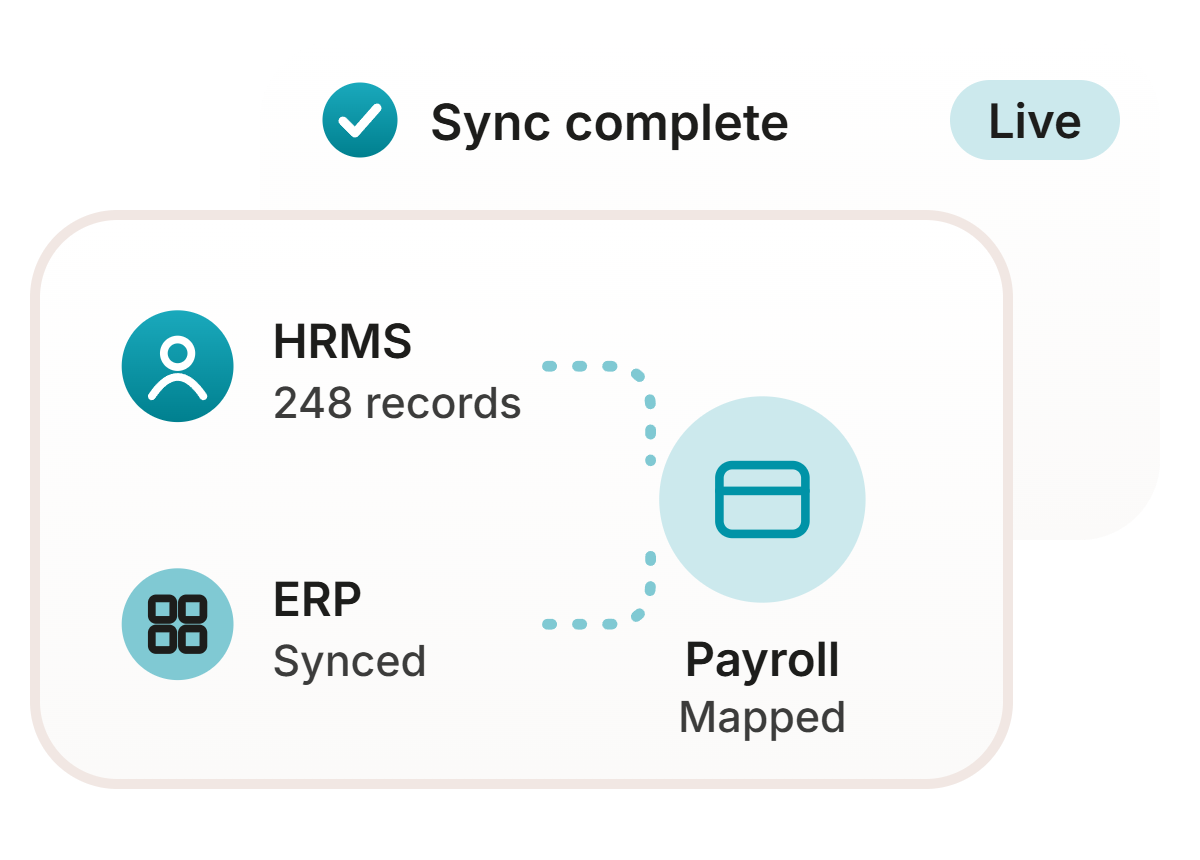
HRMS Integration
Integration capabilities for Oracle, SAP SuccessFactors, Workday, HiBob, and other systems, depending on the agreed technical scope.
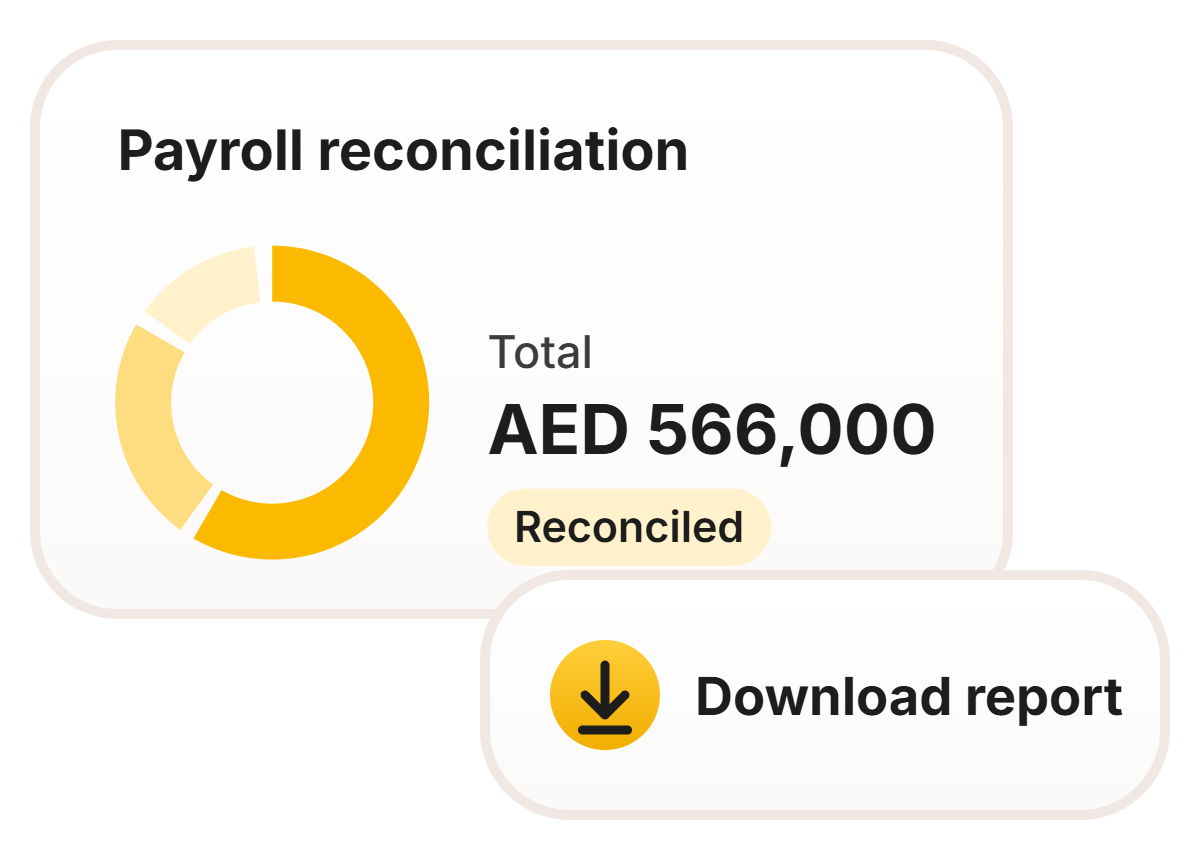
Audit-Ready Reporting
Structured reports, clear calculations, and payroll records to support internal reviews and external audits.
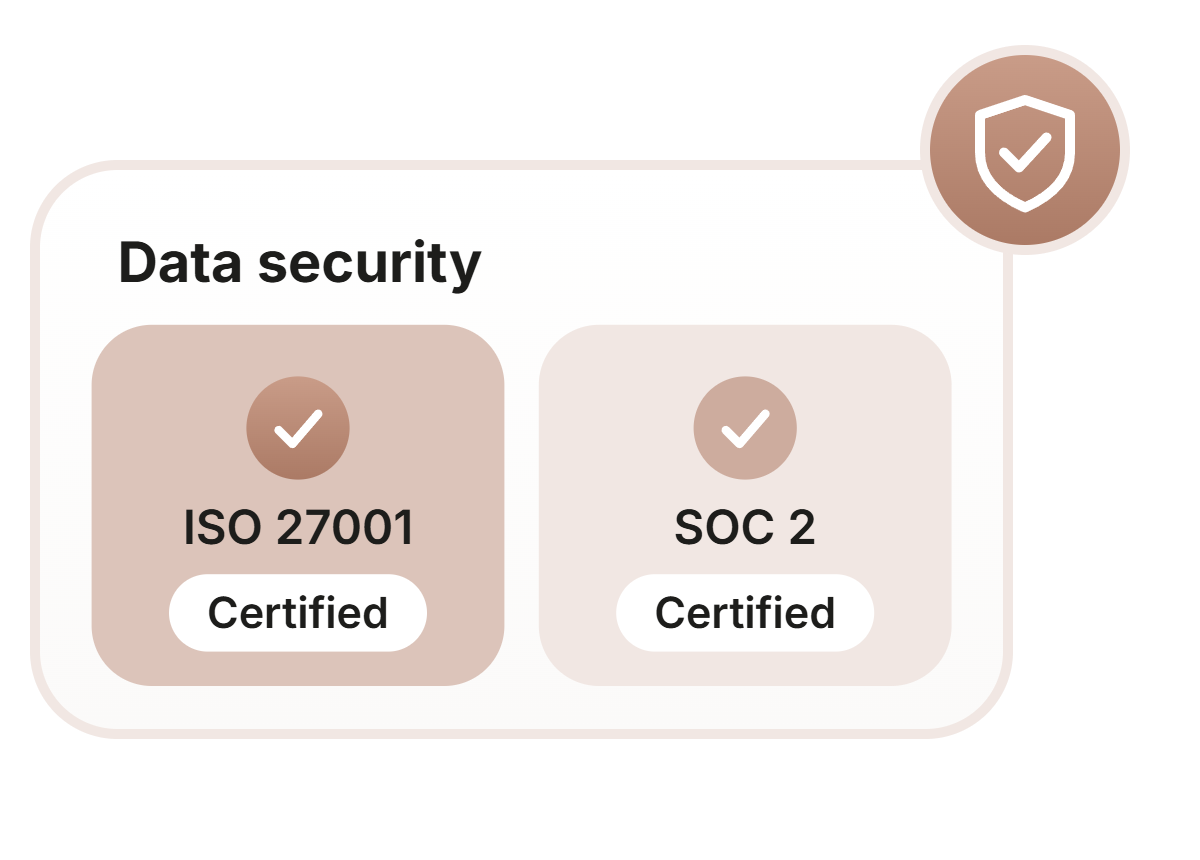
Information Security and Quality Standards
Highest standards of data security and quality management certification.
Managing payroll across DDA free zones involves more than processing monthly salaries. Employers must also maintain accurate employee records, manage social security obligations, calculate gratuity, track leave and overtime, and produce reliable financial reports.
HLB HAMT's payroll specialists combine payroll expertise with Nova VU's automation and validation capabilities to help businesses manage these responsibilities through a structured process.
Get in Touch →
Frequently asked questions
- 21 days' basic wage for each year of service during the first five years.
- 30 days' basic wage for each additional year after five years.
- A maximum entitlement of two years' wage.
Employees generally need at least one year of continuous service to qualify. Unpaid absence days are excluded from the service calculation.
- Payroll summary and employee payslips.
- Salary and deduction reports.
- GPSSA contribution reports.
- GCC social security contribution reports, where applicable.
- Gratuity accrual schedules.
- Leave balances and leave encashment reports.
- Bonus and benefit accruals.
- General Ledger journal entries.
- Department and cost-centre allocations.
- Payroll variance reports.
- Final settlement calculations for employees who leave.
- The exact reporting package depends on the employer's payroll scope and accounting requirements.
- Accurate employee master data and employment contracts.
- Correct employee classification by nationality and benefit scheme.
- GPSSA registration and monthly contributions for eligible UAE nationals.
- GCC Insurance Protection Extension System registration and contributions for eligible GCC nationals.
- Correct gratuity accruals and end-of-service settlements.
- Statutory leave entitlements and leave balance tracking.
- Working-hour and overtime calculations.
- Medical insurance and applicable employee benefits.
- Timely payment of salaries and other employee entitlements.
- Payroll accounting, GL posting, and monthly reconciliation.
- Employee exit notifications and final settlement processing.
- Secure retention of payroll records and supporting documents.
- WPS requirements should be included only where they apply to the employer's regulatory registration or are required under its banking or contractual arrangements.
DDA
DDA-related procedures and applicable UAE requirements
Area
- Employment Framework
- Applicable UAE federal labour legislation alongside relevant DDA procedures
- Regulatory Authority
- Dubai Development Authority
- End-of-Service Benefits
- Standard statutory gratuity framework for eligible expatriates, unless an applicable alternative scheme is adopted
- Social Security
- GPSSA and GCC insurance obligations for eligible employees
- Leave Entitlements
- Applicable UAE statutory leave framework
DIFC
DIFC-specific employment and payroll requirements
Area
- Employment Framework
- DIFC Employment Law and Regulations
- Regulatory Authority
- Dubai International Financial Centre Authority
- End-of-Service Benefits
- DEWS workplace savings scheme for eligible employees, subject to the applicable DIFC rules and exemptions
- Social Security
- Applicable UAE national and GCC social security obligations
- Leave Entitlements
- DIFC statutory leave entitlements
The most significant distinction is the end-of-service benefit framework. Eligible DIFC employees are generally covered by the DEWS workplace savings arrangement rather than the standard UAE gratuity system, subject to applicable exemptions and alternative arrangements.
Employers operating in both jurisdictions should maintain separate payroll configurations to reflect the relevant legal requirements.
About the Author

Sajin Rasheed
Partner – Payroll & HR · HLB HAMT
Sajin has been associated with HLB HAMT since 2005. He heads the Payroll Outsourcing Division and is responsible for making strategic decisions for the overall Division. He has over 20 years of experience in the field of finance and payroll. His dynamic initiatives at HLB HAMT have been pioneering for the industry. Under his leadership, the division commenced its transformational journey, reaching out to customers across the GCC and MEA region.